
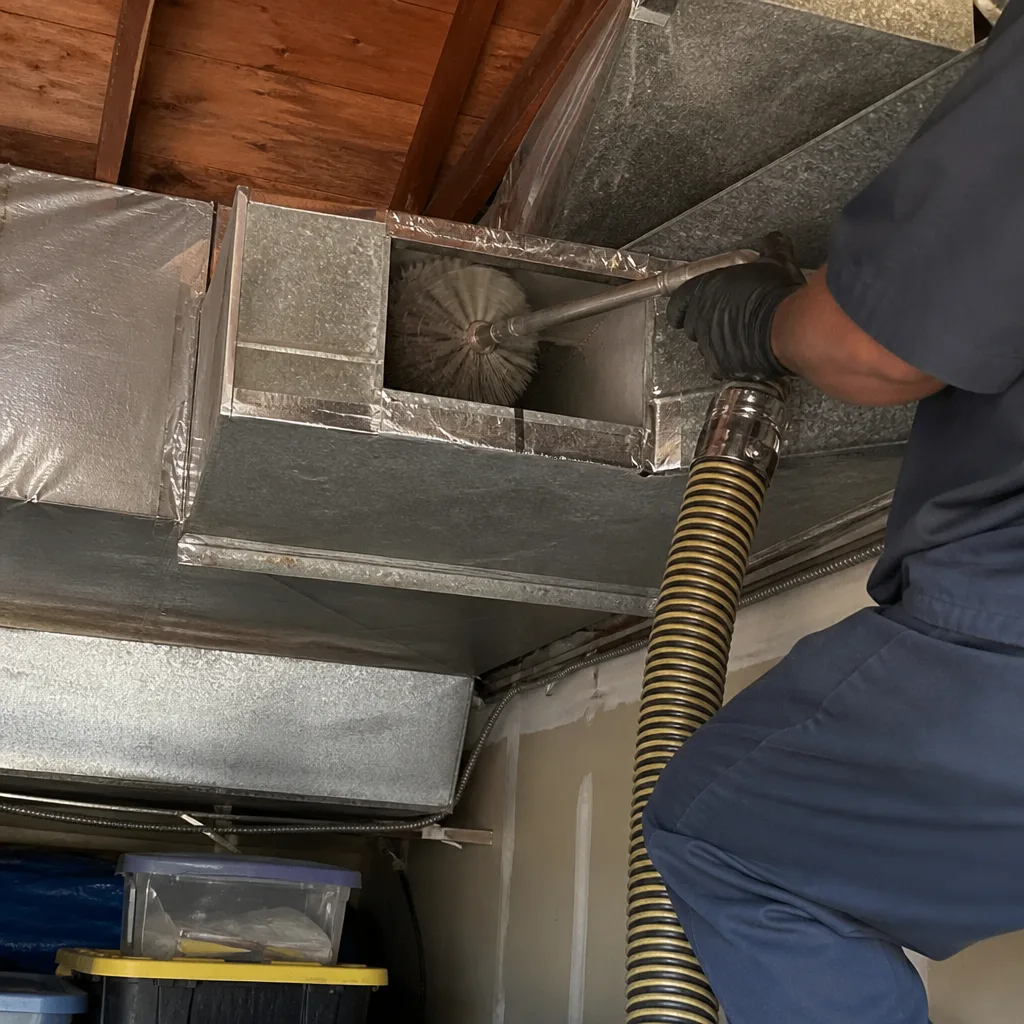
Last updated November 2, 2026
 Whole-home duct cleaning
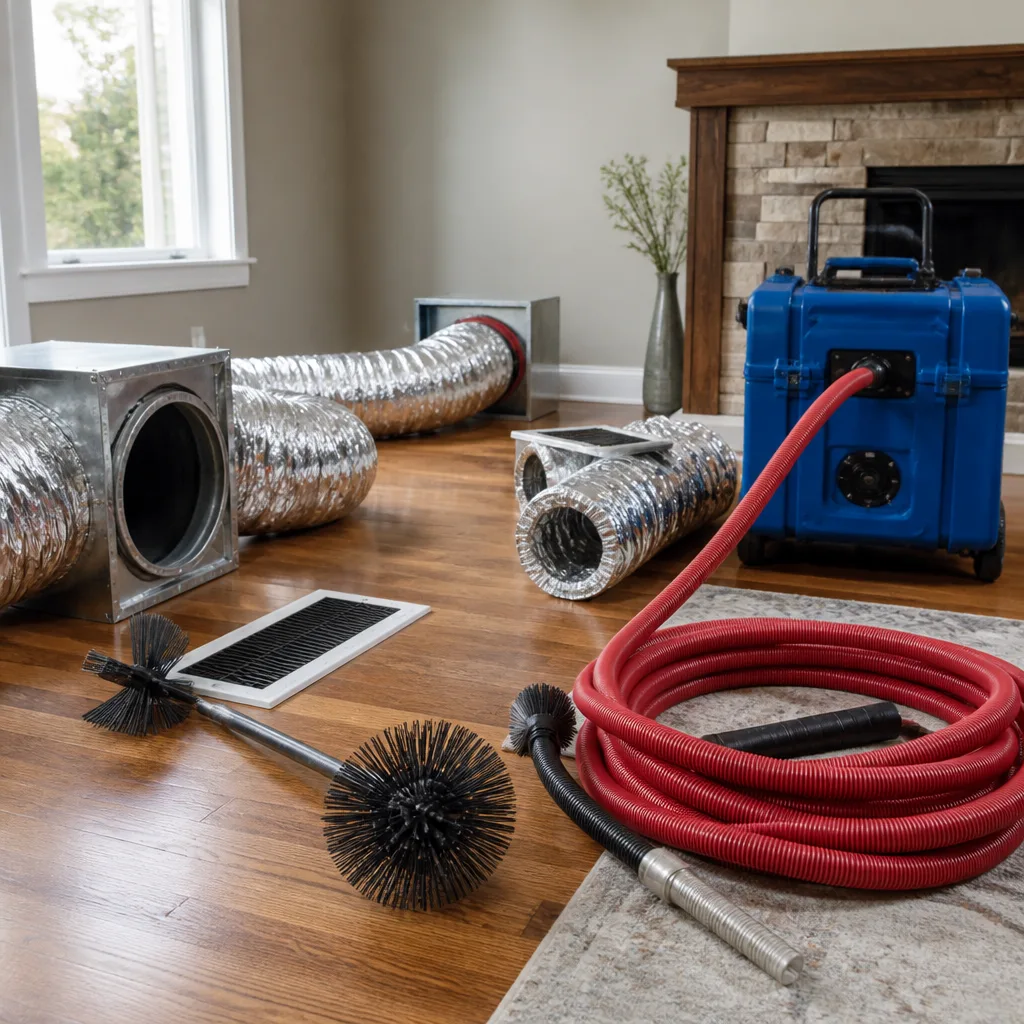
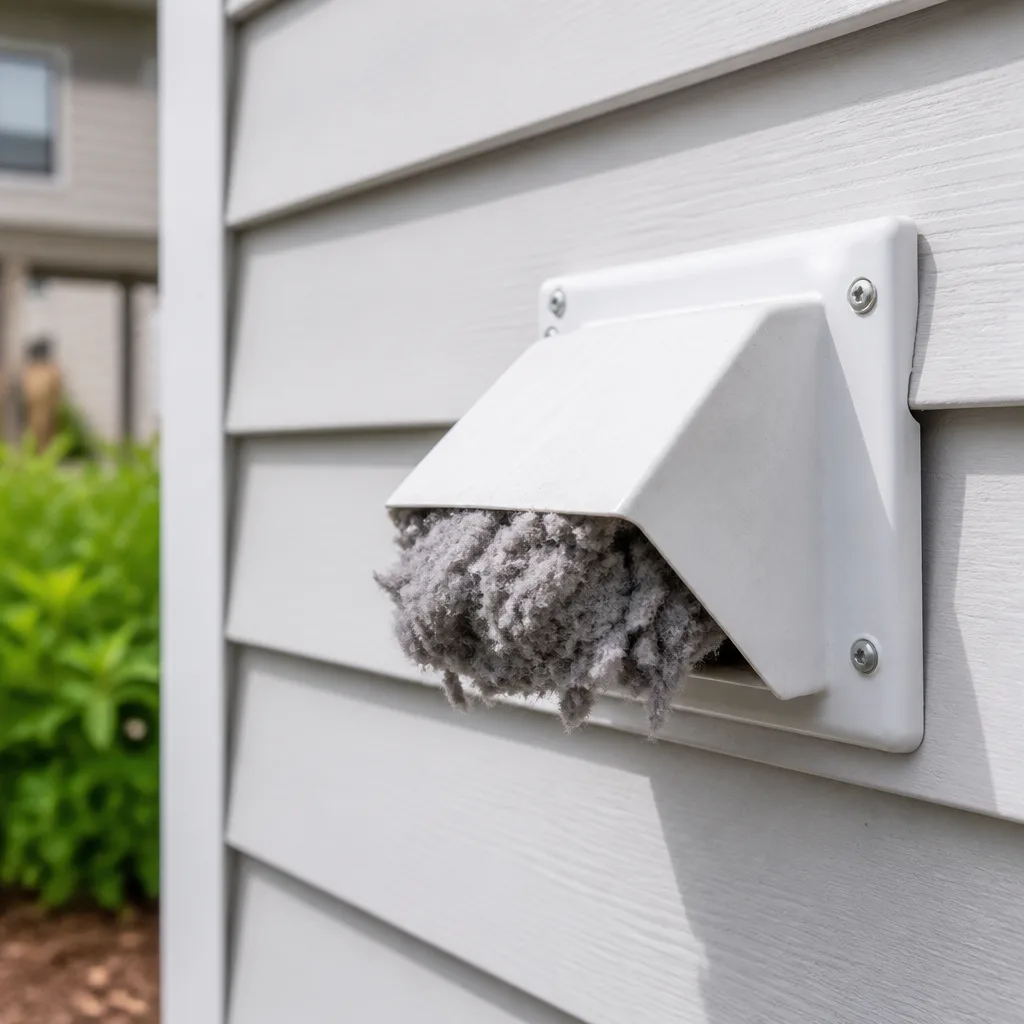 Dryer vent cleaning
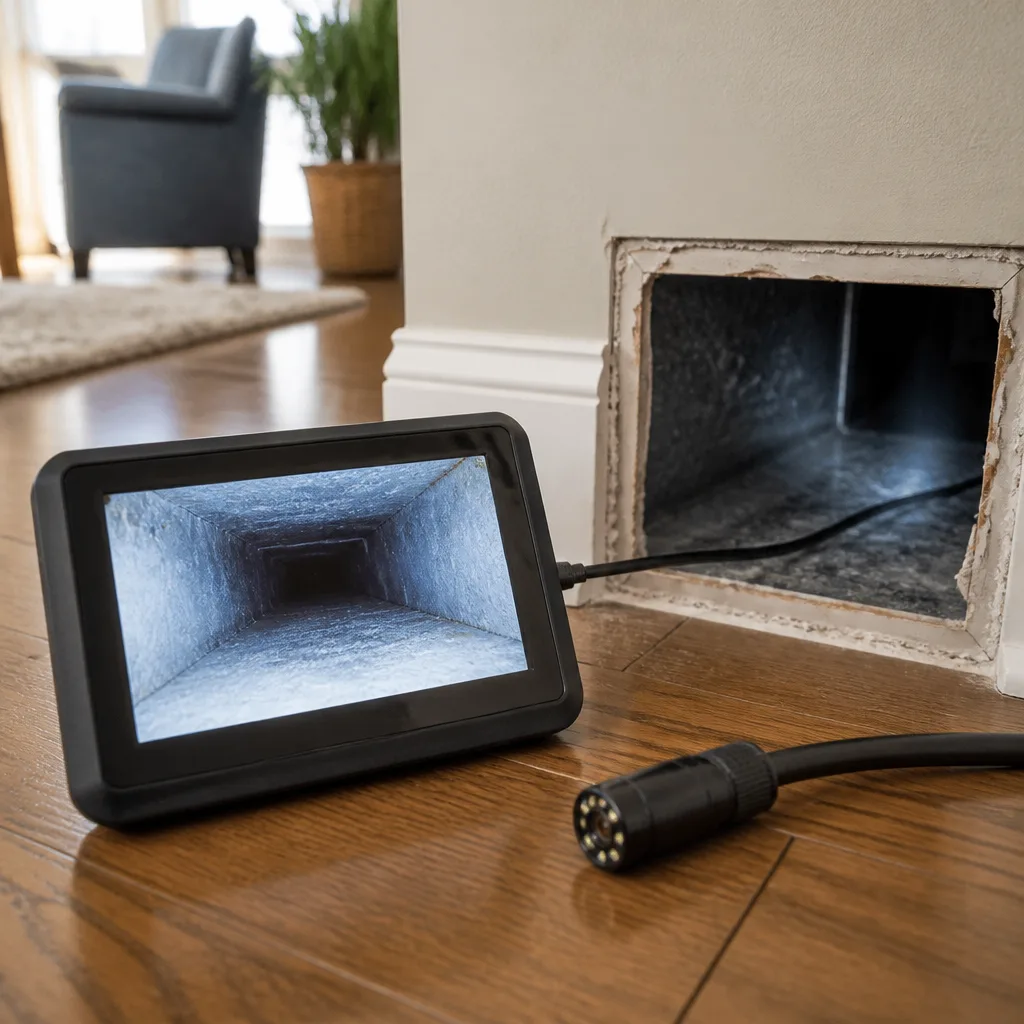 Camera inspection
 Sanitizing & deodorizing
Whole-system duct and dryer vent check with before-and-after photos - you see exactly what came out of your vents
That "$99 whole-house special" is a bait ad - the real number appears once they are in your hallway, or the "clean" is a shop-vac at the register. We photograph the inside of your ducts before and after instead.
DIY vs Professional Air Duct Cleaning: The Brentwood Homeowner’s Decision Guide
A consumer shop vac generates roughly 80 to 120 CFM of suction. A professional truck-mounted HEPA vacuum system like the Nikro units used by dedicated duct specialists generates 3,000 to 5,000 CFM. That is not a marginal difference. It is the difference between stirring debris around inside your ductwork and actually removing it from your Brentwood home. This guide explains the physics behind that gap, what you can legitimately do yourself, the three conditions where DIY duct cleaning becomes actively harmful, and how to decide when professional Air Duct Cleaning is the only answer that makes sense.
Styles & brands we work with
- Whole-home duct cleaning
- Dryer vent cleaning
- Camera inspection
- Sanitizing & deodorizing
Quick Answer
DIY air duct cleaning in Brentwood is reasonable for surface-level maintenance like register cleaning and filter changes, but it cannot replace professional cleaning when ducts hold embedded debris, mold, rodent contamination, or post-construction dust. Consumer vacuums lack the CFM and agitation reach to extract what is actually inside duct runs, and in some cases DIY attempts make conditions worse by dislodging contaminants into your living space. If your ducts have not been professionally cleaned in five-plus years or you see visible dust accumulation at supply registers, call a specialist at (833) 631-4988.
Table of Contents
- The Physics of Duct Cleaning: Why CFM Matters More Than Price
- What a Brentwood Homeowner Can Legitimately Do Themselves
- Three Conditions That Make DIY Duct Cleaning Actively Harmful
- How a Rotobrush System Works and Why Consumer Tools Cannot Replicate It
- The Honest Break-Even Analysis: DIY Maintenance vs Professional Cleaning
- Brentwood-Specific Factors That Affect Duct Cleaning Frequency
- Common Mistakes to Avoid
- When to Call a Professional
- Frequently Asked Questions
- The Bottom Line
The Physics of Duct Cleaning: Why CFM Matters More Than Price
When you compare duct cleaning quotes in Brentwood, the first instinct is to look at price. That is understandable. But the number that actually determines whether the job gets done is CFM, or cubic feet per minute of airflow.
Here is why this matters. Your ductwork is not a smooth pipe. It is a system of sheet metal, flex runs, elbows, and transitions, much of it lined with insulation or fiberboard that has a textured surface. Dust, pet dander, and construction debris embed themselves in that surface. To remove embedded debris, you need two things happening at once: mechanical agitation to loosen the particles, and sufficient negative pressure to carry them out of the duct and into a containment system before they can escape into your living space.
A shop vac moving 100 CFM can pull loose dust sitting on the bottom of a horizontal duct run. What it cannot do is maintain that negative pressure across a 30-foot duct run with bends, nor can it agitate debris embedded in duct liner. The result is predictable: some debris gets pulled out, some gets stirred up, and when the vacuum is off, what was stirred up settles back down, now looser and easier to distribute through your home when the HVAC system cycles on.
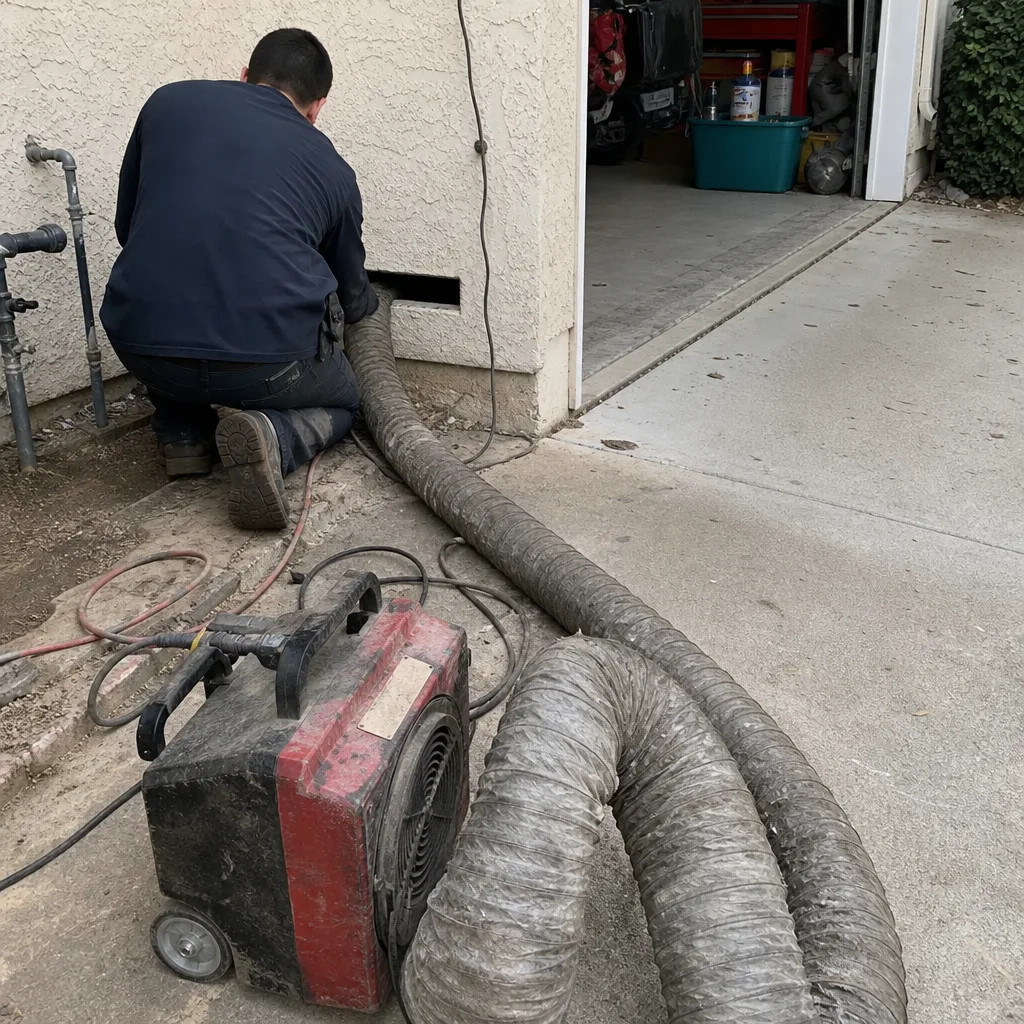
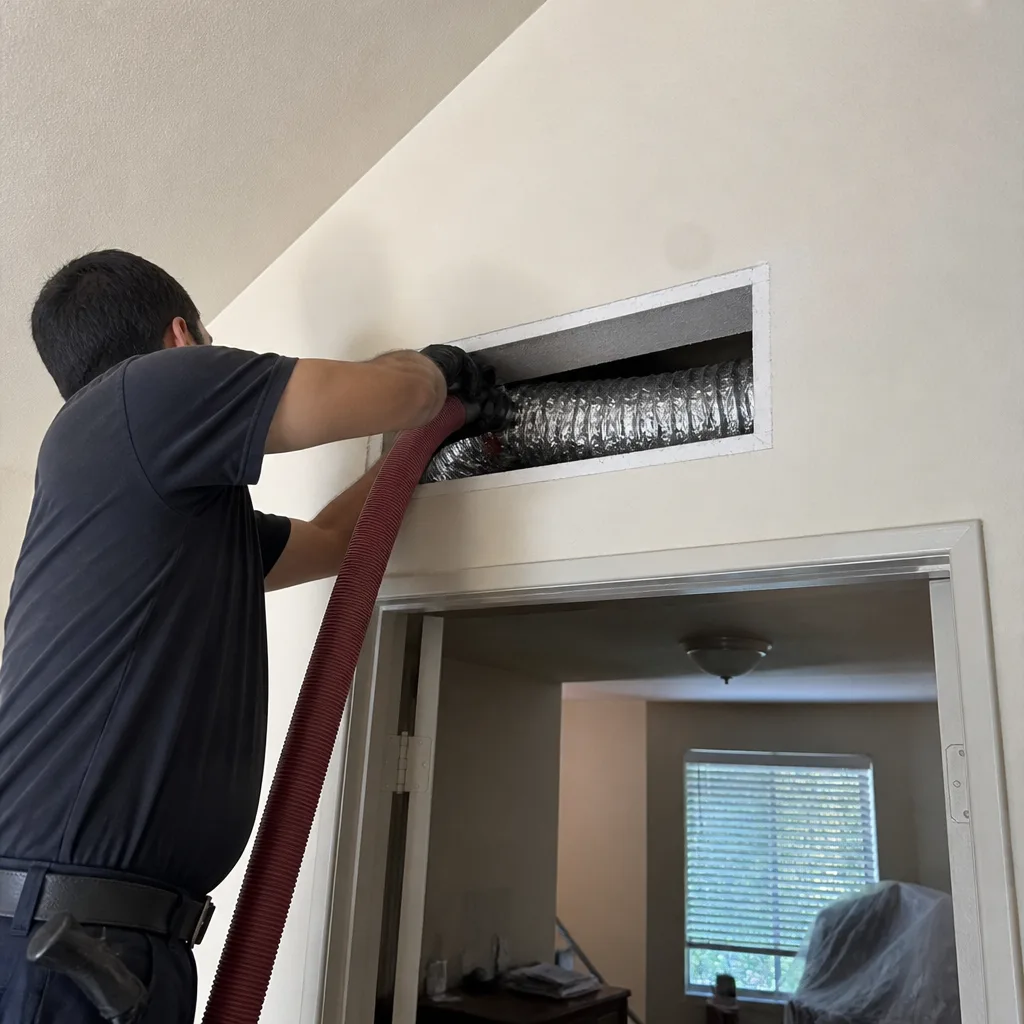
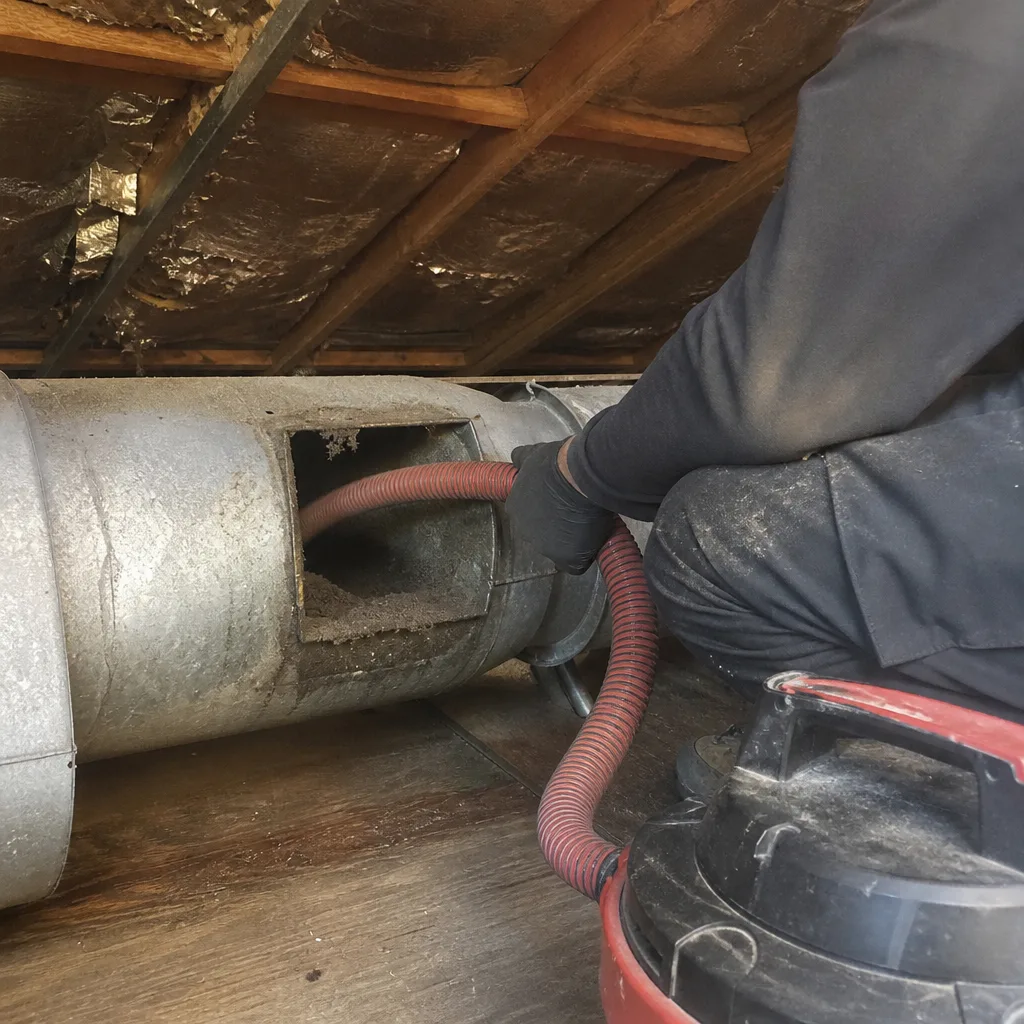
Professional systems are built differently. A truck-mounted unit generating 3,000 to 5,000 CFM puts the entire duct run under negative pressure. Every register except the one being worked on is sealed. The vacuum is pulling air through the ductwork at high velocity while a rotating brush, typically a Rotobrush or Nikro system, works the interior surfaces. Debris is carried to a HEPA-filtered containment unit outside the home or in the truck, never through your living room.
The CFM gap is not a selling point. It is a mechanical fact. And it is the reason no amount of patience with a consumer vacuum can substitute for the right equipment.
What a Brentwood Homeowner Can Legitimately Do Themselves
This section is not going to tell you to never touch your ductwork. That would be dishonest. There are legitimate DIY maintenance tasks that any Brentwood homeowner should be doing between professional cleanings, and they do make a difference. For Seasonal Air Duct Cleaning Care for Brentwood: Year-Round Homeowner’s Guide, see our dedicated resource.
1. Replace Your HVAC Filter on Schedule
This is the single highest-impact DIY task. A clogged filter restricts airflow, forces your system to work harder, and allows more particulates to circulate. In Brentwood, where summer temperatures regularly exceed 90 degrees and the AC runs for months, filters accumulate dust faster than in coastal climates. Check filters monthly during peak cooling season. Replace disposable filters every 60 to 90 days, or more often if you have pets or live near any of Brentwood’s agricultural areas where dust and pollen counts run high.
2. Clean Supply and Return Register Covers
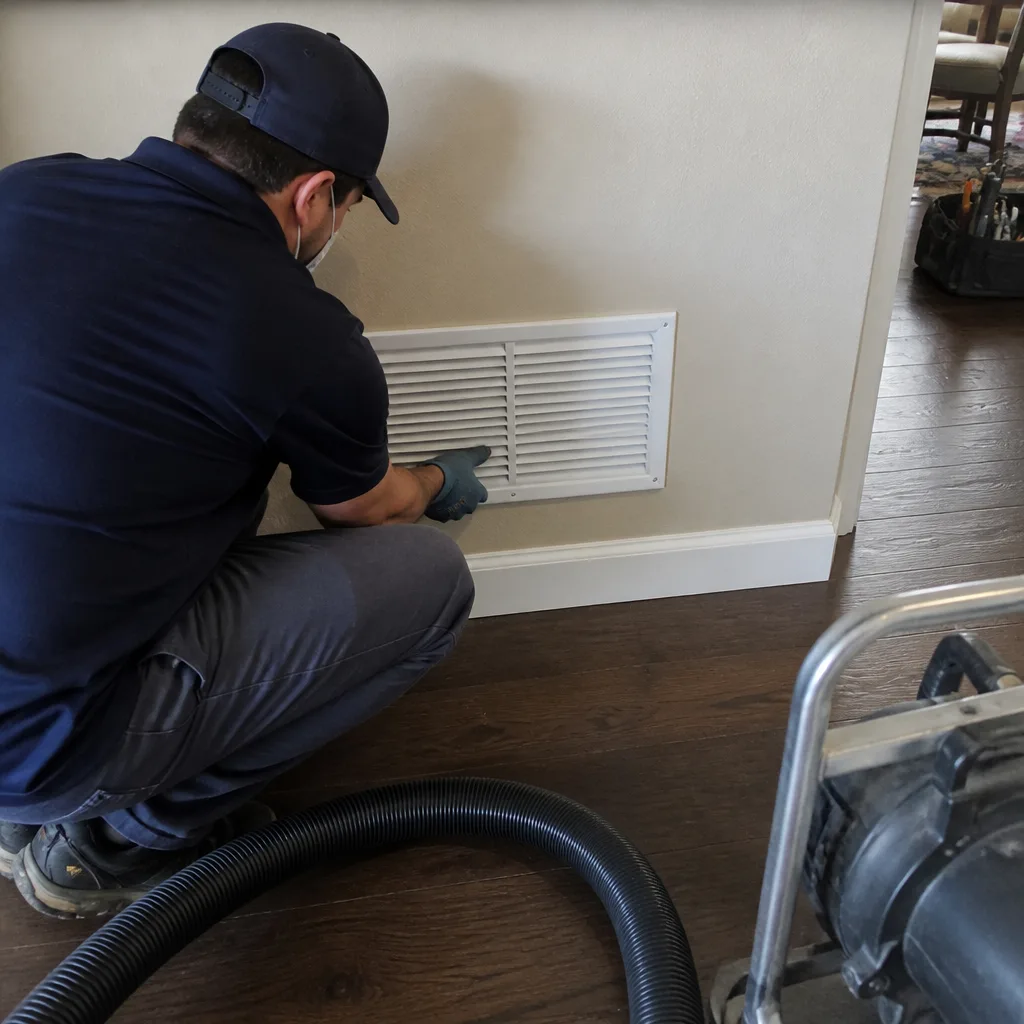
Remove the registers, wash them in warm soapy water, dry them, and reinstall. While the register is off, you can vacuum the visible interior of the boot, the transition piece that connects the register to the duct run. A standard household vacuum with a crevice tool removes loose debris from the first 12 to 18 inches. What it does not do is clean the 20 to 40 feet of duct run behind that boot, and that is where the bulk of accumulated debris lives.
3. Vacuum Accessible Return Air Cavities
If your Brentwood home has a central return, often located in a hallway, you can remove the return grille and vacuum the cavity behind it. This cavity catches a lot of dust and pet hair before it ever reaches the filter. Cleaning it monthly keeps that material from being pulled deeper into the system.
What These Tasks Accomplish
- They reduce the volume of loose dust entering the duct system in the first place.
- They extend the interval between professional cleanings by reducing the rate of accumulation.
- They improve immediate air quality in the rooms where registers are cleaned.
What They Do Not Accomplish
- They do not remove dust, dander, or debris embedded in duct liner material.
- They do not address the main trunk lines that move air through your home.
- They do not remove rodent droppings, mold, or post-construction drywall dust.
- They do not clean the blower motor, evaporator coil, or plenum.
Think of DIY maintenance as brushing your teeth between dental visits. Necessary, useful, and not a substitute for the cleaning that happens at the dentist’s office.
Three Conditions That Make DIY Duct Cleaning Actively Harmful
There is a difference between DIY being ineffective and DIY being dangerous. Most of the time, a homeowner vacuuming a register boot is simply not accomplishing much. But under three specific conditions, attempting to clean ductwork yourself is worse than doing nothing at all.
Condition 1: Suspected Mold Growth
If you see visible mold on register covers, on the interior surfaces of duct boots, or if you have had water intrusion in the duct system from a roof leak, condensation, or a flood, do not attempt DIY remediation. Disturbing mold releases spores into the air. A consumer vacuum with a standard filter does not capture spores; it aerosolizes them and exhausts them back into the room, spreading contamination far beyond the original site.
Professional remediation involves HEPA-filtered negative air machines, which is a different category of equipment than even professional duct cleaning systems. The right move is to call a specialist who can assess the scope and tell you honestly if duct cleaning is appropriate or if remediation by an environmental contractor is needed first. The team at Duct Cleaning Brentwood home can assess visible mold during a routine cleaning and advise on next steps.
Condition 2: Rodent or Pest Contamination
Brentwood’s mix of newer subdivisions and older homes near agricultural land means rodent activity in attics and crawlspaces is a recurring issue. When rodents nest in or travel through ductwork, they leave behind droppings, urine, nesting material, and in some cases carcasses. This is a biohazard, not a housekeeping problem.
DIY cleaning of rodent-contaminated ducts exposes you to hantavirus, leptospirosis, and other pathogens. The proper protocol involves sealing the duct system, using HEPA-filtered equipment, and often repairing or replacing contaminated duct sections. That means both Air Duct Cleaning in Brentwood and Air Duct Repair in Brentwood may be needed to resolve the issue completely.
Condition 3: Post-Fire Smoke Infiltration
Brentwood sits in Contra Costa County, where wildfire smoke from Napa, Sonoma, and occasionally East Contra Costa fires drifts through the area. Homes near the agricultural buffer zones also deal with controlled-burn smoke. If smoke has infiltrated your duct system, either from wildfire exposure with windows open or from a house fire, the residue is not ordinary dust. It is a fine carbon particulate that bonds to duct surfaces and off-gasses odor for months.
DIY attempts to remove smoke residue with household cleaning products can actually set the odor deeper into porous duct liner materials. Smoke-affected ducts require professional cleaning with appropriate agitation and HEPA extraction, and in some cases the duct liner itself must be replaced. This is beyond any consumer tool’s capability.
The common thread in all three conditions: disturbing the contaminant without proper containment makes your home’s air quality worse, and in some cases creates an immediate health risk. When in doubt, leave it alone and call a professional.
How a Rotobrush System Works and Why Consumer Tools Cannot Replicate It
Every duct cleaning company in Brentwood uses some kind of agitation. What separates professional results from superficial ones is whether the agitation happens simultaneously with high-volume extraction.
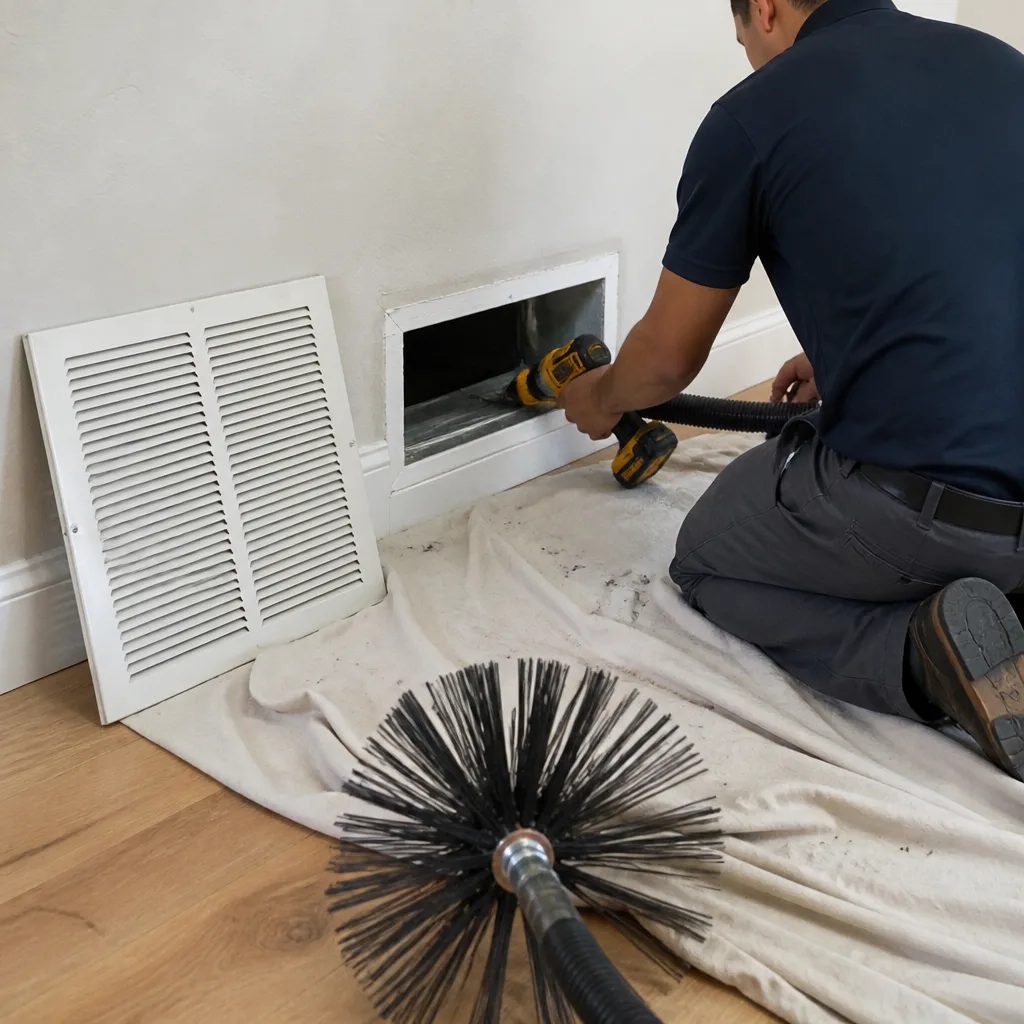
A Rotobrush system, and similar professional units from Nikro, works on a simple principle: a rotating brush head travels through the duct run while the same system applies continuous negative pressure at the point of contact. The brush loosens debris, and the vacuum removes it in the same moment. Debris does not get a chance to resettle or redistribute.
This simultaneous brush-and-vacuum design matters for one specific reason: duct liner. Many homes built in Brentwood in the 1980s and 1990s used fiberglass duct board or internally lined sheet metal. That interior surface is not smooth. Dust and dander work their way into the fibers and stay there. A brush alone pushes debris deeper. A vacuum alone cannot overcome the texture. The combination, delivered at professional CFM levels, extracts what is embedded.
A consumer approach cannot replicate this because the two functions are disconnected. You might run a brush through a duct and then vacuum, or vacuum and then brush. But whatever gets loosened between operations settles back onto surfaces. The capture rate drops dramatically. What feels productive is actually redistribution in slow motion.
This is what we mean when we say professional-grade equipment, not consumer shortcuts. The Rotobrush and Nikro systems we use at Duct Cleaning Brentwood are the same class of equipment used on commercial buildings and healthcare facilities. They reach what ordinary vacuums miss, and they do it without exhausting captured particulates back into your home’s living space.
The Honest Break-Even Analysis: DIY Maintenance vs Professional Cleaning
Homeowners in Brentwood are practical people. You want to know whether spending money on professional duct cleaning is worth it, or whether you can stretch the intervals with diligent DIY work and save the cost entirely. Our guide on How to Hire an Air Duct Cleaning Contractor in Brentwood: A Step-by-Step Guide walks through what to look for when that time comes.
Here is an honest framework for thinking about it.
What Diligent DIY Maintenance Actually Saves You
If you replace filters on schedule, clean register covers monthly, and vacuum accessible boots and return cavities, you are reducing the rate at which debris enters and accumulates in the deeper duct system. In a best-case scenario for a newer Brentwood home with tight construction, no pets, and adults-only occupancy, diligent DIY might push a professional cleaning from every three years to every five years. That is a real savings over the life of the home.
What DIY Maintenance Cannot Overcome
The equation changes with occupancy and home age. If you have two shedding dogs, one cat, and two kids tracking in dust from the sand and clay soil common in Brentwood’s East County neighborhoods, the debris entering your ducts is different in both volume and type. Pet dander is sticky. It bonds to duct surfaces. Clay dust is fine and abrasive. It embeds in liner material. No amount of filter changing stops this material from reaching your ducts; it only slows the rate.
In these conditions, delaying professional cleaning past the point of significant accumulation means the eventual professional job takes longer, uses more agitation passes, and costs more. The debris you allowed to accumulate over six years is harder to remove than what a three-year cleaning would have addressed. The break-even on skipped cleanings is not nearly as favorable as it appears on paper.
The Honest Bottom Line on Break-Even
- DIY maintenance extends professional intervals by 30 to 50 percent in clean-occupancy homes.
- DIY maintenance does not extend intervals meaningfully in high-pet, high-dust, or older homes with deteriorating duct liner.
- Skipped professional cleanings in accumulation-heavy homes increase the eventual cost of the cleaning that finally happens.
- The money you save by deferring is partially offset by the longer, more labor-intensive job required later.
If you want an honest assessment rather than a sales pitch, call (833) 631-4988. We will tell you if your ducts actually need cleaning or if another year of good DIY habits is the right call.
Brentwood-Specific Factors That Affect Duct Cleaning Frequency
Duct cleaning advice written for a national audience misses local conditions. Brentwood has specific characteristics that influence how quickly ducts get dirty and what kind of debris accumulates. Here is what actually applies to homes in the 94513 and 94531 zip codes.
Agricultural Dust and Pollen Load
Brentwood still has active farms and orchards within its boundaries and immediately adjacent. Cherry season brings orchard dust. Harvest season for corn and field crops kicks up soil that drifts into residential neighborhoods. Homes in the Garin Ranch area or near Balfour Road see higher particulate levels than homes in more centrally developed subdivisions. That agricultural dust is fine, dry, and easily drawn into the return air system when windows are open.
Summer Heat Means Constant AC Cycling
From June through September, Brentwood regularly sees 90-plus degree days. Air conditioning runs for hours each afternoon. That constant airflow pushes whatever dust is in your home through the return registers and into the duct system. The more your AC runs, the faster your ducts accumulate the dust that the filter does not catch.
Older Neighborhoods vs New Construction
Homes built during Brentwood’s major expansion years of the 1990s and 2000s are now 20 to 30 years old. Duct systems in these homes may have never been professionally cleaned. If your neighbors cannot remember the last time duct cleaning happened in their home, that should tell you something about the norm. Newer homes, especially those built in the last five years, often have significant construction debris in the ducts from day one: drywall dust, sawdust, and insulation particles that got into the system before the registers were installed. A first-year professional cleaning is arguably the most important one for a new Brentwood home.
Fire Season Smoke Intrusion
Contra Costa County’s fire season increasingly affects Brentwood with extended smoke events. Smoke particles are exceptionally fine and easily drawn into homes through gaps around doors and windows, then circulated through the HVAC system. Even if you run your system in recirculate mode, the smoke that entered the home when windows were open is now in the ductwork. Homes exposed to multiple smoke events over recent years often benefit from professional cleaning to remove the carbon residue that regular filter changes do not address.
Common Mistakes to Avoid
- Using a standard shop vac with no HEPA filtration on duct interiors. The vacuum exhaust releases fine particulates back into the room, undoing the work you just did and potentially making air quality worse than before you started.
- Removing duct tape and access panels without knowing how to reseal them. Duct systems in Brentwood homes rely on proper sealing to maintain efficiency. A panel left loose leaks conditioned air into the attic or crawlspace, and your energy bill will reflect it.
- Spraying cleaning chemicals into the ductwork. Household cleaning products leave residue inside ducts that attracts dust and can off-gas volatile organic compounds into the air your family breathes. Professional cleaning uses mechanical agitation, not chemicals.
- Attempting to clean flex duct with a brush on a drill. The interiors of flex ducts are thin plastic over coiled wire. A rotating brush can tear the liner, creating leaks and introducing plastic particles into the airstream. Flex duct that is damaged needs replacement, not aggressive brushing.
- Ignoring the return side of the system. Many homeowners clean supply registers and forget the returns, which often hold more debris since they pull unfiltered air from the living space. Half-cleaned systems just re-contaminate quickly.
- Assuming a low per-vent price equates to a complete job. Some national chains advertise low per-vent pricing and then inflate the job with add-ons. Ask any contractor you are considering what the total price for your entire system will be before work starts. We give one flat price per system, agreed before work begins.
- Neglecting dryer vents while focusing on HVAC ducts. Dryer lint is a fire hazard, and in Brentwood’s dry climate, lint matter builds up quickly. Dryer Vent Cleaning in Brentwood is a safety measure, not an upsell.
When to Call a Professional
If you have never seen the inside of your ducts and your Brentwood home is more than five years old, you are due for an inspection and likely a professional cleaning. If you see dust puffing from supply registers when the system kicks on, if you notice a persistent musty smell when the AC runs, or if anyone in your home has unexplained allergy symptoms that ease when you leave the house, those are indicators that the duct system is circulating particulates. If you have had construction work done inside the home, drywall dust has almost certainly entered the duct runs. And if you have any of the three conditions covered above, mold, rodents, or fire smoke, do not attempt DIY under any circumstances. Duct Cleaning Brentwood offers free estimates in Brentwood; call (833) 631-4988 and we will assess what is actually in your ducts and what can be done about it. For more guides & resources, visit our blog.
Frequently Asked Questions
Professional air duct cleaning in Brentwood typically ranges from $350 to $750 for a complete system cleaning of an average single-family home, depending on the number of vents, accessibility of the duct runs, and the level of contamination. Homes with extensive rodent contamination or mold remediation needs will fall higher. We quote one flat price per system before any work starts, so you know the total before we begin. Call (833) 631-4988 for an exact quote for your home.
Most Brentwood homes benefit from professional duct cleaning every three to five years. Homes with pets, occupants with allergies, or those in agricultural-adjacent neighborhoods may need cleaning every two to three years. New construction homes should be cleaned within the first year to remove construction debris that was present from the beginning.
You can clean the visible portion of register boots and return cavities with a shop vac, but you cannot clean the 20 to 40 feet of duct run behind those openings. A shop vac’s 80 to 120 CFM of suction cannot maintain negative pressure across a full duct system, and its filter does not capture fine particulates. What you accomplish is surface-level; what you need is depth-level.
Cheaper quotes typically come from companies using portable consumer-grade vacuums, fewer agitation passes, or a bait-and-switch model where the advertised price covers a fraction of the actual vents in your home. Ask what equipment they use, ask for a total-system price in writing, and ask if they do before-and-after photos of the duct interiors. Professional-grade Rotobrush and Nikro equipment costs far more to own and operate than a portable vacuum, and that difference appears in both the price and the result.
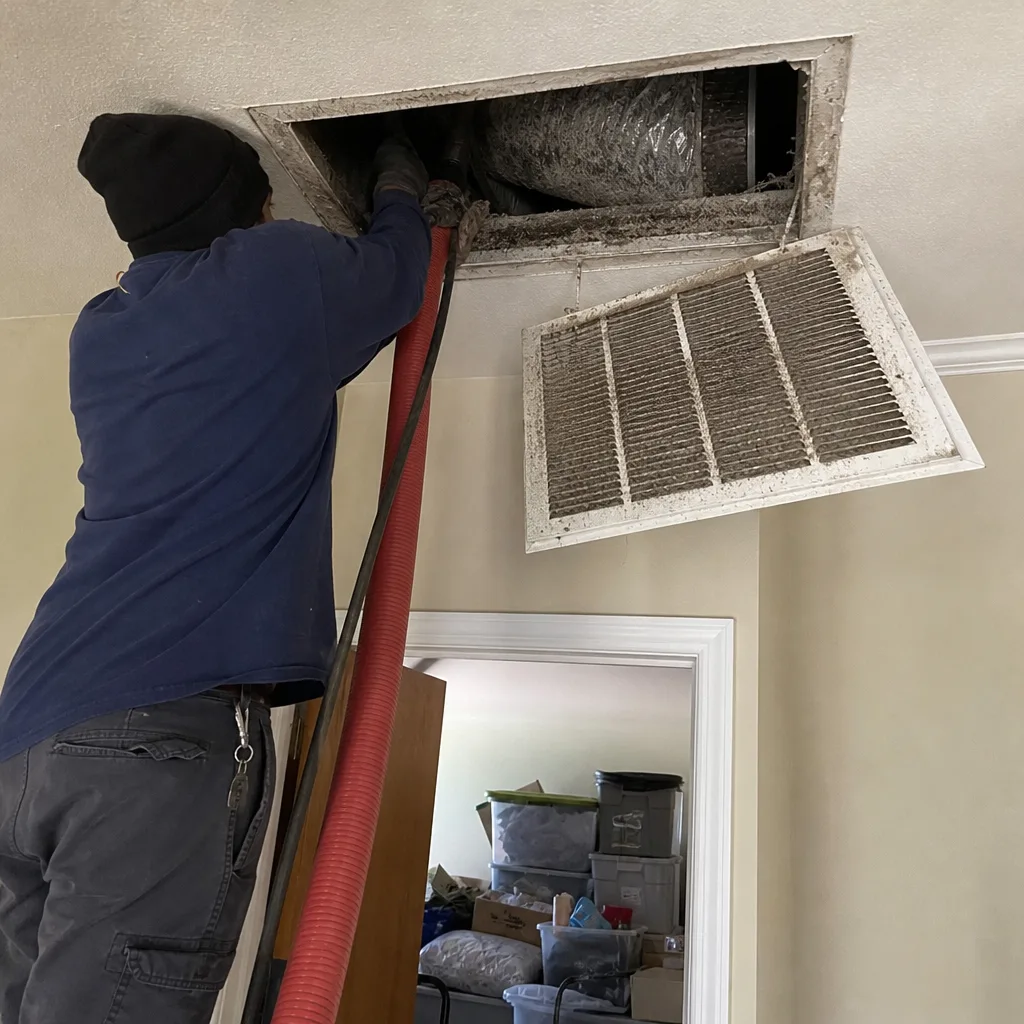
Reputable duct cleaning companies in Brentwood provide before-and-after photos of the duct interiors taken during the cleaning. Ask for photos of the main trunk line, the returns, and any areas of concern. If a company declines to show you the inside of your own ducts, that is a red flag. We show every customer what their ducts looked like before and what they look like after the Rotobrush and Nikro systems have worked them over.
Professional duct cleaning removes accumulated pollen, dust, and agricultural particulate that collects in ductwork over years of exposure to Brentwood’s environment. Removing that reservoir reduces the volume of irritants circulating when the HVAC system runs. It will not eliminate seasonal allergies entirely, but it addresses the portion of your indoor air quality that your duct system controls. Combined with HEPA filtration products from Honeywell and Aprilaire, the improvement is measurable.
The Bottom Line
DIY duct maintenance has a legitimate place in a Brentwood homeowner’s routine. Changing filters, cleaning registers, and vacuuming accessible boots keeps debris from accumulating as quickly between professional cleanings. What DIY cannot do is replace the extraction power and simultaneous agitation that professional-grade equipment delivers. The CFM difference is not marketing language; it is the mechanical reason consumer tools leave debris behind. If your ducts are overdue, see visible dust at registers, or have been exposed to mold, rodents, or smoke, the honest answer is to call a specialist. You would not expect a household scrub brush to clean the underside of your car. Ductwork deserves the same standard.
Written by the team at Duct Cleaning Brentwood, serving Brentwood since 2018.
See the difference
 Before
 After
 Before
 After
 Before
 After