
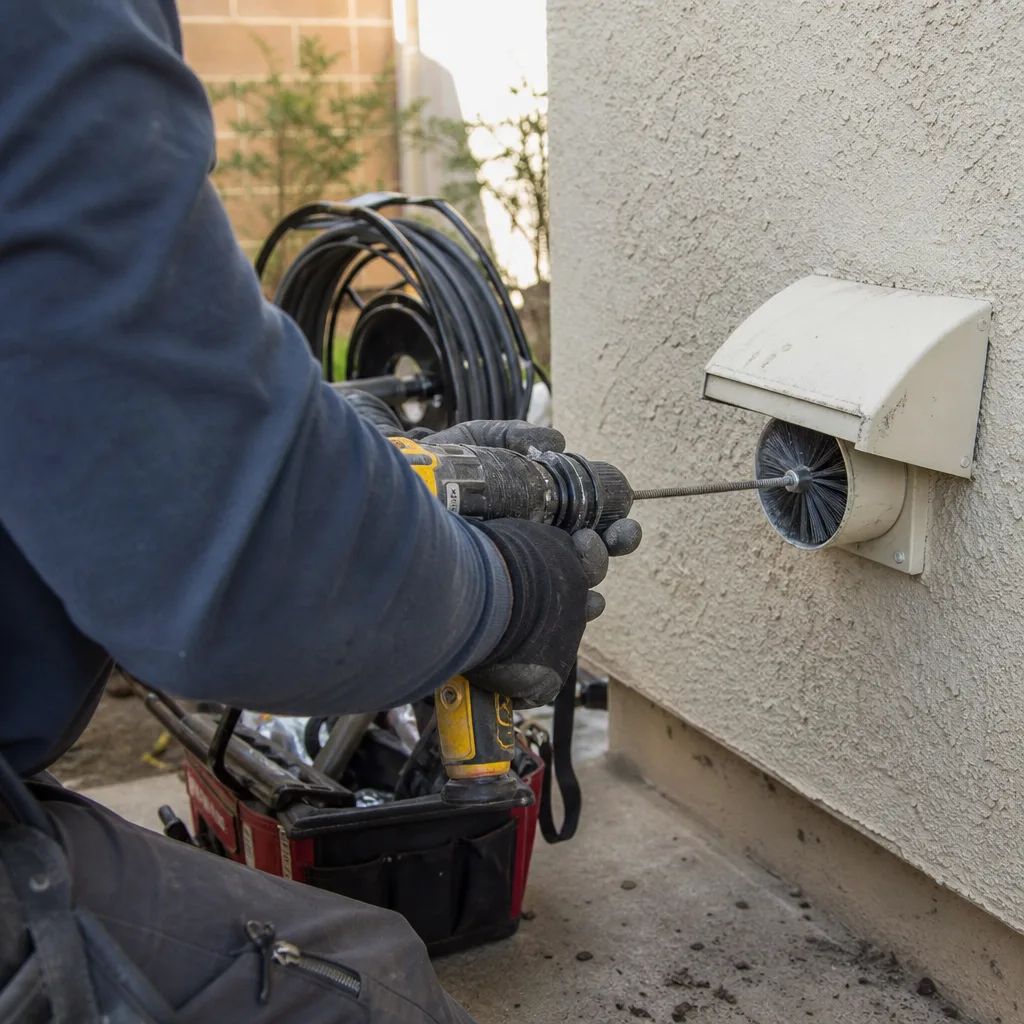
Last updated November 2, 2026
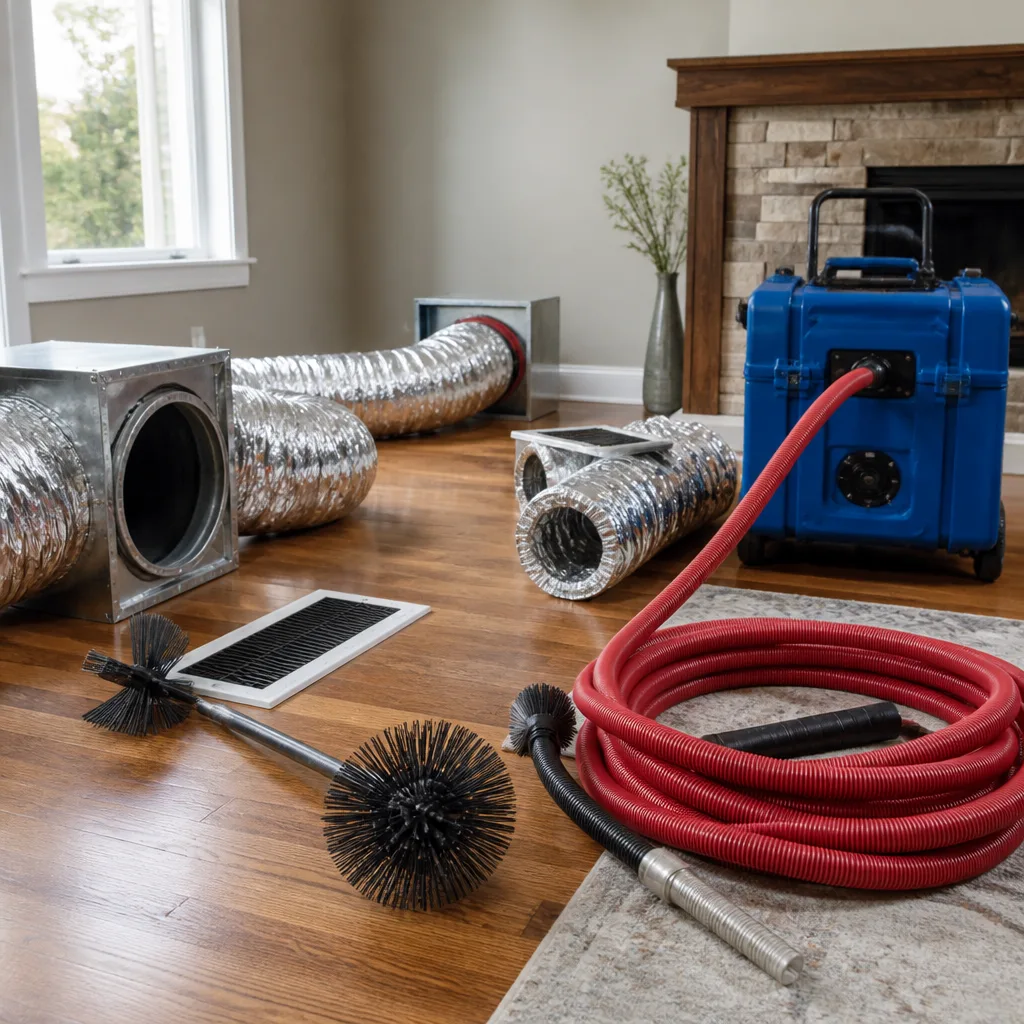 Whole-home duct cleaning
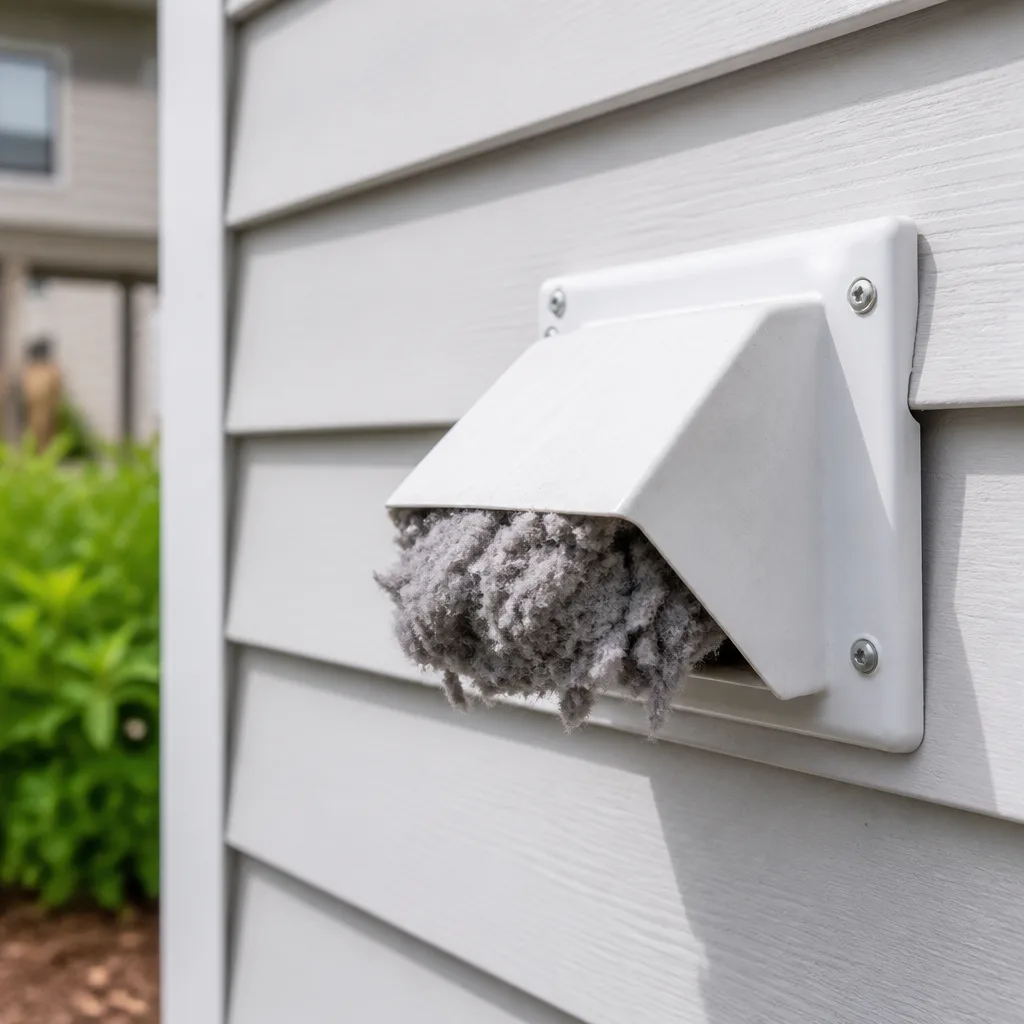 Dryer vent cleaning
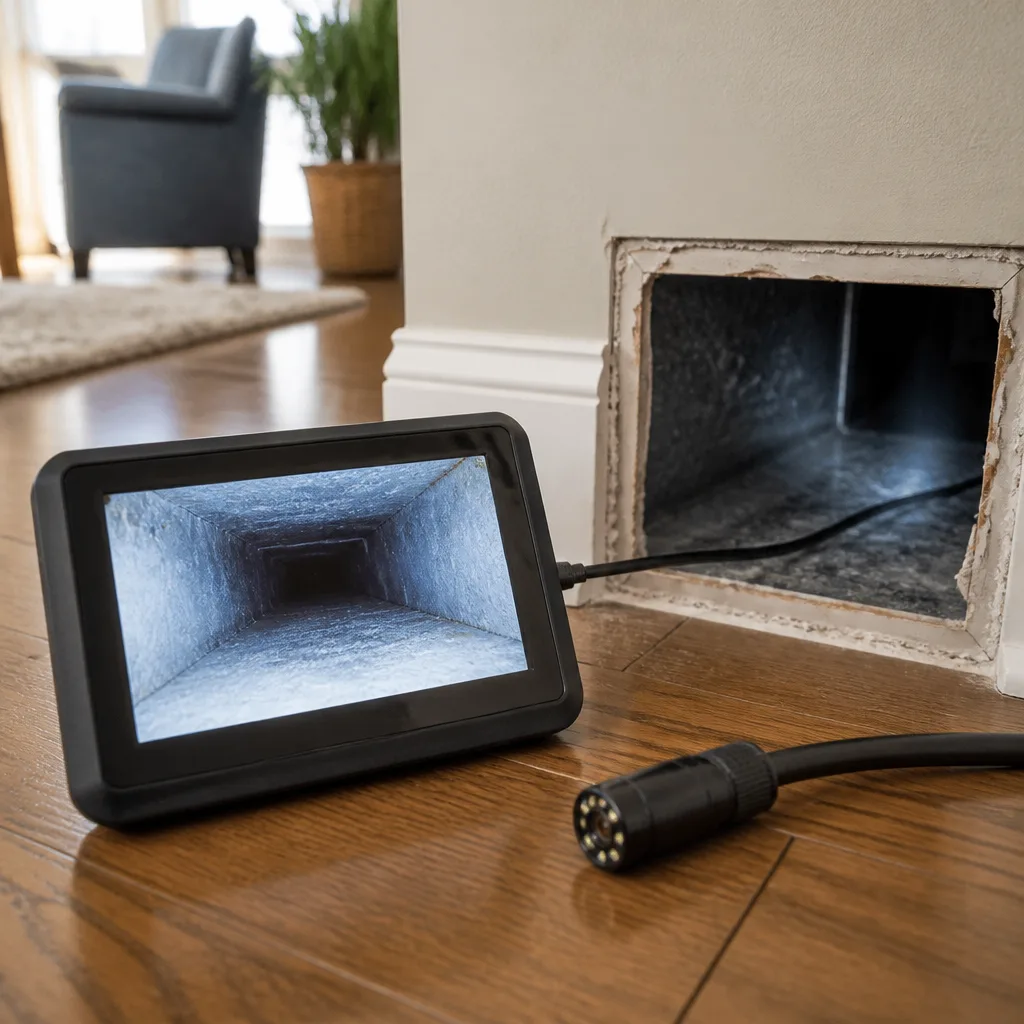 Camera inspection
 Sanitizing & deodorizing
Whole-system duct and dryer vent check with before-and-after photos - you see exactly what came out of your vents
That "$99 whole-house special" is a bait ad - the real number appears once they are in your hallway, or the "clean" is a shop-vac at the register. We photograph the inside of your ducts before and after instead.
Air Duct Cleaning Emergency Preparedness Guide for Brentwood Homes
When a wildfire burns within twenty miles of Brentwood, the instinct to crank up the HVAC fan and filter the smoke out of the house is almost universal. It is also the single most common way homeowners in Contra Costa County turn a recoverable air-quality event into a whole-home contamination problem. Duct systems do not filter smoke. They distribute it. This guide explains the specific emergency scenarios Brentwood faces – Delta wind-driven wildfires, agricultural chemical drift from East County farming operations, and earthquake-related duct displacement – and provides a defined response protocol for each. For more on protecting your system long-term, see our Air Duct Cleaning Maintenance Checklist for Brentwood Homeowners. You’ll learn when to shut your system down, what to document for insurance, and why the equipment used after an emergency event matters far more than the equipment used for routine maintenance.
Styles & brands we work with
- Whole-home duct cleaning
- Dryer vent cleaning
- Camera inspection
- Sanitizing & deodorizing
Quick Answer
During an active wildfire smoke event in Brentwood, shut the HVAC system off and leave it off until the outdoor air clears and the duct system has been assessed. Post-event duct contamination from smoke, agricultural drift, or earthquake debris requires professional-grade remediation equipment – specifically negative air systems like those from Abatement Technologies – rather than Air Duct Cleaning services designed for routine maintenance. Document everything with photos and measurements before any cleaning begins, as proper documentation is the difference between an approved insurance claim and a denied one.
Table of Contents
- Wildfire Smoke Protocol: What to Do During an Active Smoke Event
- Post-Event Duct Assessment: What a Technician Actually Checks
- Post-Earthquake Duct Inspection: The Overlooked Damage Points
- Agricultural Chemical Drift: A Brentwood-Specific Exposure Risk
- Documenting Duct Contamination for an Insurance Claim
- Why Emergency Remediation Equipment Is Different from Standard Cleaning
- Brentwood’s Risk Profile: Why This Guide Matters Here
- Common Mistakes to Avoid
- When to Call a Professional
- Frequently Asked Questions
- The Bottom Line
Wildfire Smoke Protocol: What to Do During an Active Smoke Event
The moment you smell smoke inside your Brentwood home, the HVAC system becomes a liability. A standard 1-inch fiberglass furnace filter captures roughly 15 percent of particles in the 0.3 to 1 micron range – the exact size range of wildfire smoke particulate. What the filter misses enters the blower motor, coats the heat exchanger, and gets pushed through every supply vent in the house. In the 2020 SCU Lightning Complex fires, which burned within thirty miles of Brentwood, HVAC systems across East Contra Costa County were pulling smoke-tinged air into return vents for days before homeowners noticed the odor embedding in carpets, upholstery, and duct interiors.
Steps to Take During an Active Smoke Event
- Shut the system off at the thermostat. Set the fan to “Auto” and the system to “Off.” Do not run the fan in “On” mode to “circulate and filter” – this is the instinct that spreads particulate through the entire duct network.
- Close all exterior doors and windows. This reduces the rate of smoke infiltration, but no Brentwood home is sealed tightly enough to keep smoke out entirely. Assume some particulate has already entered the return-air side of the system.
- Do not replace the filter during the event. Removing a loaded filter to “check it” releases the captured particulate back into the airstream and the room. Wait until the outdoor air clears.
- Document the event. Note the start date, the duration of exposure, and whether you ran the system before shutting it down. Insurance adjusters look for this timeline when evaluating post-event contamination claims.
- Wait for the air to clear, then schedule an assessment. The particulate that entered during the event has now settled on duct interior surfaces. Running the system before cleaning redistributes it. This is where the protocol matters: assessment first, cleaning second, system restart third.
In Brentwood specifically, the Delta breeze pattern means smoke events often begin with evening offshore winds carrying particulate from the Central Valley or coastal range fires, then shift direction mid-event. A homeowner who runs the system overnight “just while it’s smoky outside” can pull in eight to ten hours of concentrated particulate before morning. The ducts are now coated. The cleaning job has become more involved, and the risk of odor re-release has increased significantly.
Post-Event Duct Assessment: What a Technician Actually Checks
After a wildfire smoke event, a legitimate duct assessment in Brentwood is not a quick glance at the return register. It is a systematic inspection of the entire air pathway, from the return grilles to the supply boots, looking for evidence of particulate deposition, heat damage, and filter bypass. Here is what the assessment involves, in order.
- Return-side inspection. The return duct runs carry the highest-volume airflow through the system, which means they also carry the highest concentration of smoke particulate. A technician should open the return plenum at the air handler and photograph the interior before cleaning. This establishes the contamination baseline.
- Blower cabinet inspection. The blower wheel and motor housing accumulate a fine, sooty film after a smoke event. If the wheel is gummed with particulate, balancing and airflow suffer. Our technicians using Rotobrush and Nikro systems check this area specifically, because the film is denser here than anywhere else in the system.
- Supply-register inspection. Each supply vent in a Brentwood home is an exit point for whatever the blower moved. If particulate is visible at the register grille, it is present throughout the entire supply run behind it. Cleaning individual registers without the full duct run is cosmetic, not corrective.
- Filter housing check. Smoke events can warp or damage the filter frame itself. A filter that no longer seats flush against the housing allows bypass – unfiltered air pulling around the filter edge and directly into the blower. This is a sub-$50 repair that many post-event cleaning jobs miss entirely, leaving the system vulnerable to the next event.
- Insulation and liner check. Return ducts in many Brentwood homes use internal fiberglass liner for sound attenuation. Smoke particulate embeds in that liner and is almost impossible to remove with standard agitation tools. In severe cases, liner replacement is the only viable remedy. An honest assessment should tell you this before cleaning, not after.
The assessment matters because it determines the appropriate response. A light particulate film from a single overnight smoke exposure is a different job than a heavy deposition from a week-long event. The cleaning method, the time required, and the cost all depend on getting the assessment right the first time.
Post-Earthquake Duct Inspection: The Overlooked Damage Points
Brentwood sits in the Sacramento-San Joaquin Delta region, roughly fifteen miles east of the Greenville Fault and within forty miles of the Hayward Fault. A magnitude 5.0 event on either fault is a matter of when, not if. What most homeowners do not realize is that the most common duct damage from a moderate quake is not a collapsed run – it is connection displacement, insulation disturbance, and debris entry at the air handler cabinet. These problems are invisible from the living room and linger for years if not inspected.
What to Inspect After a Quake
- Supply and return duct connections at the plenum. A duct that has slipped off its collar by even half an inch creates an air leak. The fan pulls attic air (or crawlspace air, in pier-and-beam Brentwood homes) directly into the conditioned stream. This is a contamination pathway every time the system runs.
- Air handler cabinet alignment. The cabinet sits on a platform or hanger system, and a lateral shake can shift it. A shifted cabinet stresses the duct connections even if they appear intact at first glance. We have seen cabinets in Brentwood move a quarter-inch and crack the condensate pan as collateral damage.
- Insulation disturbance. Duct runs in unconditioned attics are insulated. Quake movement can separate insulation from the duct skin, creating condensation points that lead to mold growth within six to twelve months – a problem entirely unrelated to the earthquake but traceable to it.
- Debris entry at the return grille. Ceiling-return homes in Brentwood often have a return grille cut into a hallway ceiling. Quake movement can crack the surrounding drywall, and drywall dust is then pulled into the return path on every cycle. The fix is sealing the grille frame and checking the gypsum behind it before any cleaning work.
- Flex-duct compression. Flexible duct in Brentwood attics is supported by strapping. A sharp shake can compress an entire run against a roof truss, reducing airflow and creating a focused wear point that eventually tears. The system loses efficiency quietly, and the homeowner notices only when a room no longer holds temperature.
Agricultural Chemical Drift: A Brentwood-Specific Exposure Risk
Brentwood is surrounded by active agricultural production – cherries, corn, stone fruit, and row crops throughout East Contra Costa County. With that agricultural activity comes the periodic application of pesticides, herbicides, and soil fumigants. The California Department of Pesticide Regulation maintains active monitoring in the region, and drift events – where wind carries application material beyond the property boundary – are a documented occurrence. When drift enters a home, the HVAC system is the primary distribution mechanism.
Drift exposure differs from smoke exposure in one critical way: the contaminant is not just particulate. Many agricultural chemicals are semi-volatile organic compounds. They attach to airborne particulates, enter the return-air stream, and then off-gas slowly from the duct interior, the filter media, and even the air handler insulation for weeks or months after the initial event. A homeowner who smells a chemical odor near the vents after a drift event is not imagining it, and running the fan will not dilute it.
For drift events, our Brentwood team takes a different cleaning approach than for routine dust or post-construction debris. The focus shifts to filter replacement – even if the filter is not visibly dirty, it is loaded with adsorbed chemical residue – and to duct interior agitation that removes the particulate carrier, not just the surface film. Air handler filtration upgrades, including media filters from Honeywell and Aprilaire, are a common component of a post-drift response because the standard 1-inch filter simply does not have the surface area to capture the fine particles that carry agricultural chemicals.
Documenting Duct Contamination for an Insurance Claim
When a qualifying event – fire, smoke, earthquake, or documented chemical drift – contaminates a Brentwood home’s duct system, the insurance claim process hinges on documentation. Homeowners who photograph nothing and schedule a cleaning immediately often discover that the insurer considers the damage “preventive maintenance” and denies the claim. Here is what to document, and when.
Documentation Checklist for Post-Event Claims
- Date and time the event began and ended. Insurers want a defined exposure window. “It was smoky for a few days” is not a window. “Smoke smell entered the home at 3 PM on October 12 and persisted through October 15” is a window.
- Photos of the thermostat settings. If the claim involves a homeowner running the system during the event, an honest photo of the thermostat at “Off” post-event supports the narrative that the homeowner acted responsibly. Photos of registers and returns before any cleaning are stronger evidence than after.
- Photos of visible particulate at registers. Use a flashlight and a cell phone. The photo does not need to be professional – it needs to establish that contamination reached the visible supply points. This is the evidence that connects the event to the contaminated area.
- Filter condition documentation. Remove the filter only after the event has fully passed, then photograph both sides next to a white sheet of paper for contrast. If the filter shows smoke staining, that is a $12 piece of evidence worth more than any testimony.
- Professional assessment report. A technician report that includes pre-cleaning photos of the interior duct surfaces, a written description of visible soot or residue, and a statement that the condition is consistent with wildfire smoke exposure is the documentation insurers respond to. This is where a specialist with proper inspection equipment matters – a cell phone photo through a floor register will not convince an adjuster, but a scoped image of a coated return plenum will.
We have worked with Brentwood homeowners on both sides of this: the ones who documented thoroughly and had claims approved, and the ones who cleaned first and documented nothing, then discovered the insurer would not reimburse. The sequence is assess, document, clean, document again. Never clean first.
Why Emergency Remediation Equipment Is Different from Standard Cleaning
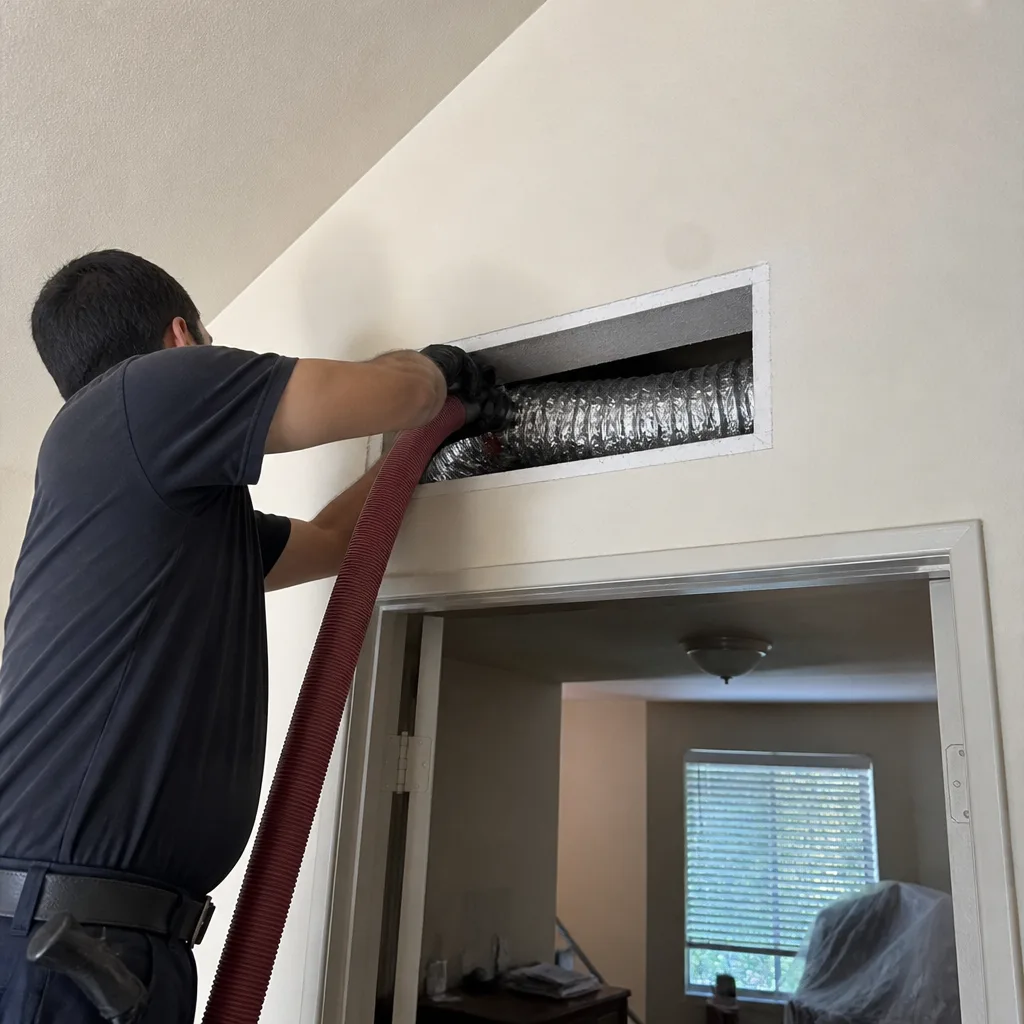
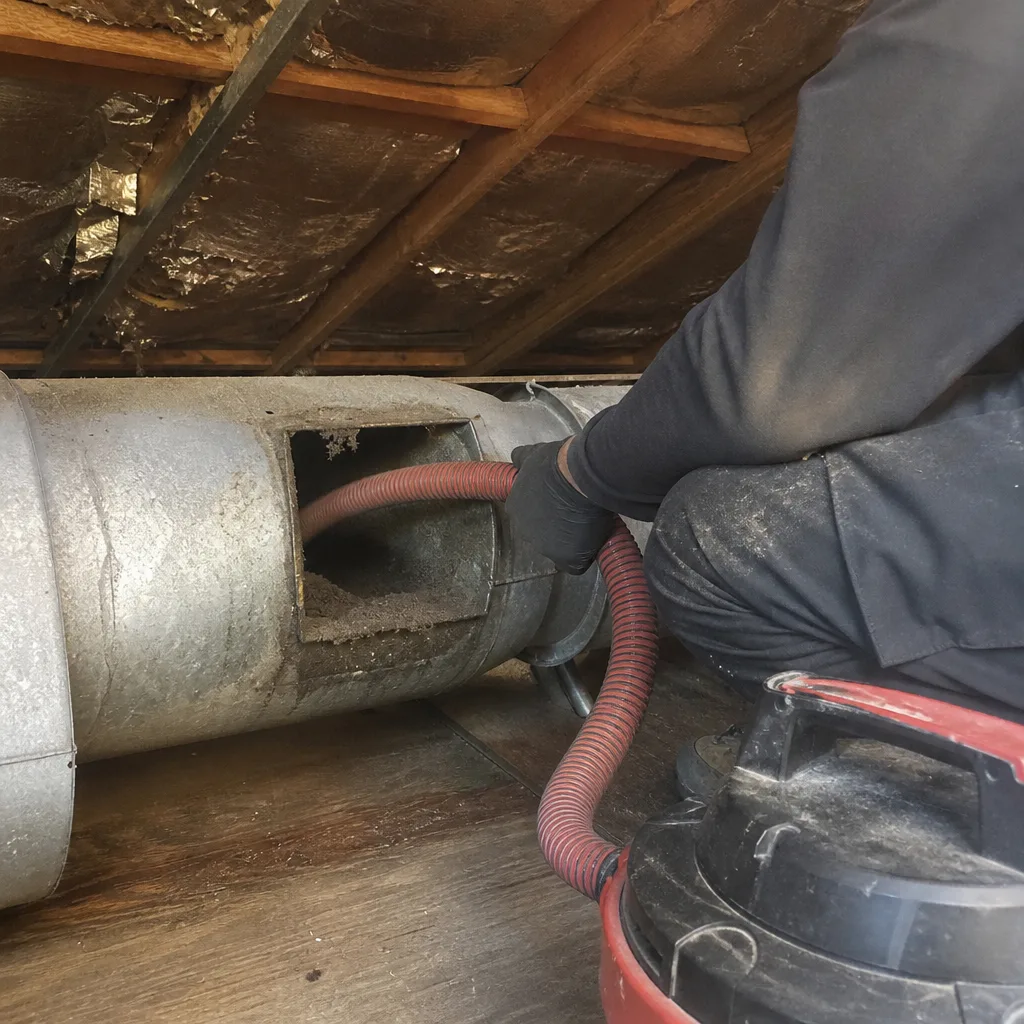
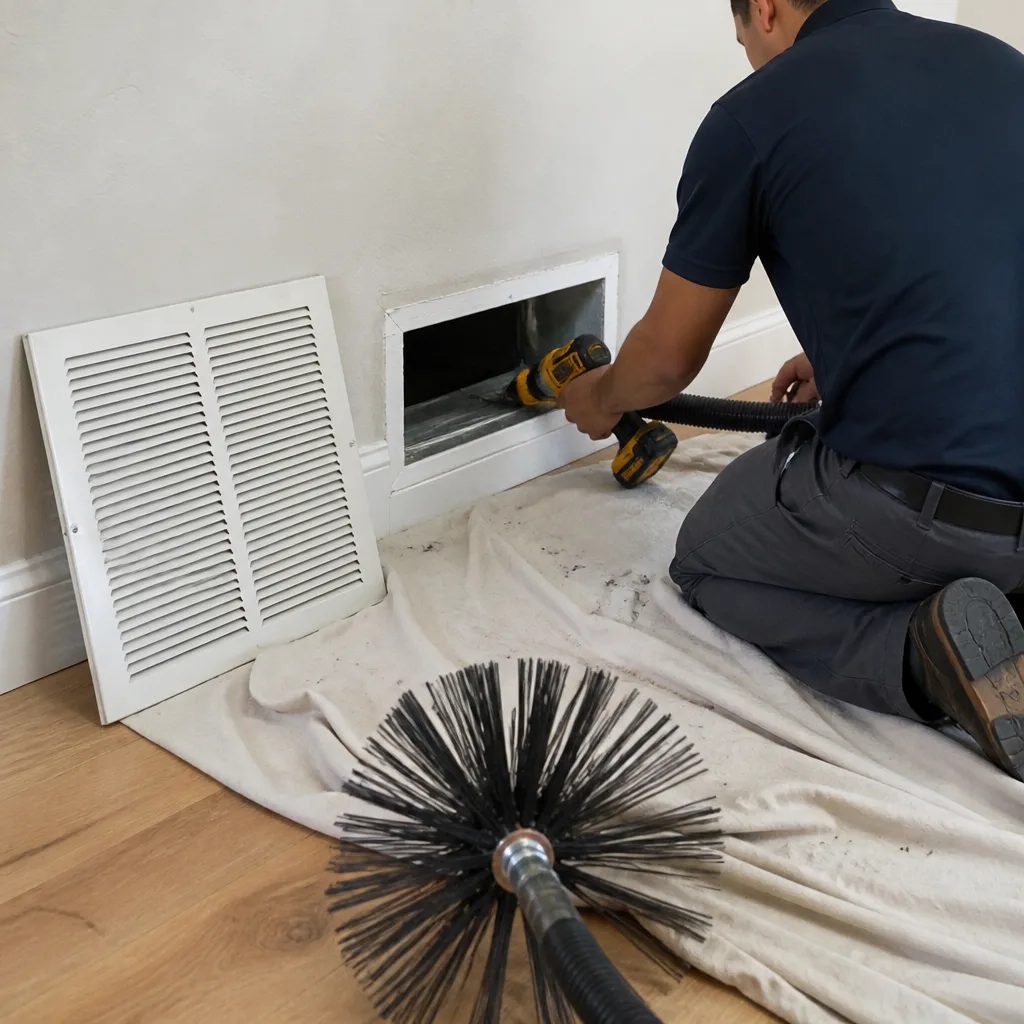
Standard duct cleaning uses mechanical agitation – rotating brushes, compressed air whips, and high-powered vacuum collection – to dislodge and remove loose dust and debris from duct interiors. That works for routine maintenance, as covered in our Air Duct Cleaning Permits, Codes & Inspections in CA: What You Need to Know. It is not appropriate for post-event remediation, where the contaminant is fine particulate that has settled and bonded to the duct surface, often combined with chemical residue or smoke oils. This is where the distinction between consumer-grade cleaning and professional remediation matters.
When Negative Air Systems Are Required
Abatement Technologies is a name most homeowners never hear until they have a problem: mold remediation, asbestos abatement, or post-fire particulate control. These are the systems used in hospitals and commercial buildings for contaminant control during construction and remediation work. In a post-event duct scenario, a negative air system creates a controlled low-pressure environment inside the duct system, pulling air – and suspended contaminant – through HEPA filtration rather than allowing it to escape into living spaces during the cleaning process.
A standard duct cleaning setup uses a large fan-driven vacuum at one end of the duct run to collect dislodged debris. This works when the debris is inert – dust, hair, common household material. It does not work when the debris is fine combustion particulate or chemically contaminated residue, because that material re-aerosolizes easily and standard collection filters pass particles that a HEPA filter captures. The homeowner ends up with the ducts looking cleaner and the living room air quality worse than before the job started.
Our Brentwood team carries Abatement Technologies products for exactly this reason. When a post-event assessment indicates fine particulate that would re-aerosolize under standard agitation, the negative air setup is the correct tool. For routine cleaning of a normally occupied Brentwood home, the Rotobrush and Nikro systems do the heavy lifting. For emergency response, the equipment selection changes because the contaminant has changed. That distinction is what separates a specialist who understands the physics of particulate control from a generalist who is just trying to move air through a hose.
Brentwood’s Risk Profile: Why This Guide Matters Here
Brentwood’s geography creates a specific confluence of air-quality risks that most Bay Area communities do not share. The Delta wind corridor channels particulate from northern and eastern sources directly into the city. The agricultural buffer that gives Brentwood its open feel also brings seasonal chemical applications. The fault proximity makes earthquake-related duct damage a real probability, not an abstract risk. A homeowner in Brentwood should think about duct emergencies the same way they think about wildfire evacuation routes – not because it will happen tomorrow, but because the consequence of being unprepared compounds quickly.
We have seen the range of outcomes in this city. Homes south of Balfour Road that took in heavy smoke during the 2018 Delta fires needed full supply-run cleaning before the odor would clear. Homes along the agricultural boundary on the east side of town have dealt with chemical drift events that standard cleaning could address only partially, requiring filter upgrades and multiple return-side passes. And homes throughout Brentwood’s older subdivisions, where duct systems date to initial construction in the 1990s and early 2000s, have shown connection failures after moderate quake events that went undiagnosed for years.
The common thread across all of these scenarios is that the homeowner’s first response determined the scope of the problem. Air Duct Cleaning in Brentwood is a different job before versus after an emergency event, and understanding that difference is the entire point of this emergency preparedness approach.
Common Mistakes to Avoid
- Running the fan during a smoke event. This is the most damaging instinct in the book. The fan does not filter smoke; it distributes it. Every liter of air you move through the blower during an active event pushes particulate deeper into the duct interior and every connected room.
- Replacing the filter during the event. Removing a smoke-loaded filter inside the living space releases trapped particulate back into the room and exposes you directly to whatever the filter captured. Wait until the outdoor air clears, then replace it outside if possible.
- Cleaning before documenting. Once the duct surfaces have been cleaned, you cannot photograph evidence of contamination. Insurers need pre-cleaning documentation. The sequence is photograph, assess, clean, photograph again. Never the reverse.
- Assuming a standard cleaning handles post-event contamination. Post-smoke particulate is fine, charged, and sticky. Standard agitation tools may spread it around the duct interior without removing it. Post-event work often requires negative air containment and a different cleaning approach entirely.
- Ignoring the filter housing after an event. A warped or poorly seated filter allows bypass air around the filter edge, which means every future cycle pulls unfiltered air through the blower. After a smoke event, the filter housing needs inspection – a $50 repair that prevents thousands in future contamination.
- Assuming earthquake damage will be obvious. The most consequential duct damage from a moderate Brentwood-area quake is connection displacement and cabinet shift, not collapsed runs. If the system runs and the house cools, most homeowners assume the ducts are fine. They are often wrong.
When to Call a Professional
Call a duct specialist when the event is over and the outdoor air has cleared, and before you run the HVAC system again. The call should happen after any documented smoke intrusion, after any earthquake strong enough to rattle dishes in the cabinets, and after any chemical odor event near the vents. If you have already run the system during an event, the cleaning needs to happen sooner, because the contamination has been distributed rather than contained. If you are filing an insurance claim, the professional assessment should happen before any cleaning work begins – that documented report is your leverage.
Duct Cleaning Brentwood offers free estimates in Brentwood. Call (833) 631-4988 to schedule a post-event assessment. If your system has not experienced an emergency but you are preparing for fire season, the same number gets you a pre-season duct inspection at no cost.
Frequently Asked Questions
You know smoke entered the ducts if you smelled smoke inside the house at any point during the event, regardless of whether the HVAC system was running. Duct systems are not sealed against ambient air; return-air pathways pull from living spaces continuously. The only way to confirm the extent of contamination is to open the return plenum and photograph the interior surfaces. A visual inspection of a floor register is not sufficient – the return side shows contamination first and most heavily.
Call (833) 631-4988 for a post-smoke duct assessment in Brentwood. Estimates are free.
No. Running the fan during or after a smoke event does not clear the smell; it distributes the particulate and combustion byproducts through the entire duct network and every room in the house. The fan draws smoky air into the return, pushes it past a filter that captures only a fraction of sub-micron particles, and sends it out through every supply vent. The correct protocol is to shut the system off at the thermostat until the outdoor air clears and a duct assessment has been completed.
Call (833) 631-4988 if smoke has entered your Brentwood home. We will walk you through the shutdown and assessment process.
Regular duct cleaning removes loose dust, hair, and common household debris using mechanical agitation and high-powered vacuum collection. Post-event remediation handles fine particulate – wildfire smoke soot, chemical drift residue, earthquake-generated drywall dust – that has settled and partially bonded to duct surfaces. Remediation work often requires negative air containment from Abatement Technologies to prevent the contaminant from re-aerosolizing into living spaces during cleaning. The equipment and the approach change because the contaminant has changed.
Call (833) 631-4988 to discuss which approach fits your situation.
Photograph the thermostat settings showing the system was off, photograph visible particulate at supply registers and return grilles, photograph the filter against a white background for contrast, and obtain a professional assessment report that includes pre-cleaning interior duct photos and a written statement describing the contamination. The sequence matters: document before cleaning, never after. Insurers respond to evidence that connects the event to the contamination, and pre-cleaning photos are the only evidence that survives the cleaning process.
Call (833) 631-4988 for a documented assessment in Brentwood before you file your claim.
Check the duct connections at the supply and return plenums for displacement, the air handler cabinet for shifting or misalignment, the duct insulation in the attic for separation, the return grille and surrounding drywall for cracks, and the flexible duct runs for compression against roof framing. Most of these points are not visible from the living space and require attic access. A quake strong enough to move furniture can shift a duct connection without causing any visible damage to the home itself.
Call (833) 631-4988 for a post-earthquake duct inspection in Brentwood.
Every three to five years under normal conditions, but the schedule shifts after a qualifying event. A wildfire smoke event within thirty miles, a documented chemical drift event from surrounding agricultural operations, or a moderate earthquake all change the equation. If any of these occur, the ducts should be assessed as part of the recovery process, regardless of when the last cleaning happened. Post-event cleaning is driven by contamination, not schedule.
Call (833) 631-4988 if you have experienced any of these events in Brentwood and need a professional opinion.
The Bottom Line
Brentwood’s specific combination of wildfire smoke, agricultural chemical drift, and earthquake risk means the city’s homeowners need a duct emergency protocol, not a standard maintenance schedule. For more guides & resources on protecting your home’s air quality, explore our blog. The protocol is simple to state and harder to follow when the air is full of smoke: shut the system off, document everything, get a professional assessment, and only then clean. The equipment used matters, because fine combustion particulate and chemical residue demand containment methods that ordinary cleaning tools do not provide. And the documentation matters, because the difference between a covered insurance claim and a denied one often comes down to photos taken before the cleaning began.
Dryer Vent Cleaning in Brentwood follows the same principle: lint accumulation is a fire risk that compounds during events when dryers run more. Air Duct Repair in Brentwood addresses the physical damage that earthquakes and age create. Together, these services form the full response to what Brentwood’s environment throws at its duct systems. If your home has been through a smoke event, a drift event, or a quake this year, call (833) 631-4988 for a free estimate. The call is free, the assessment is straightforward, and the alternative is running contaminated air through your home every time the system kicks on.
Written by the team at Duct Cleaning Brentwood, serving Brentwood since 2018.
See the difference
 Before
 After
 Before
 After
 Before
 After