
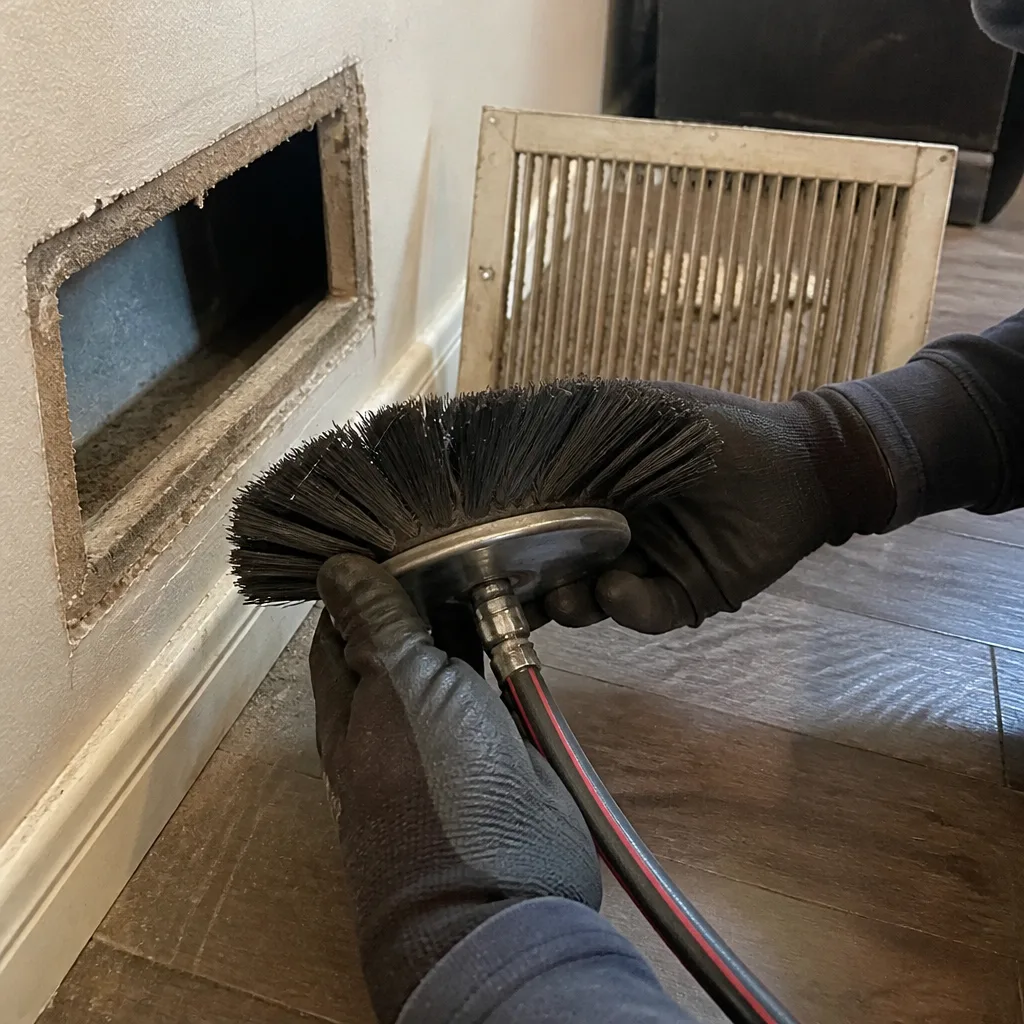
Last updated November 2, 2026
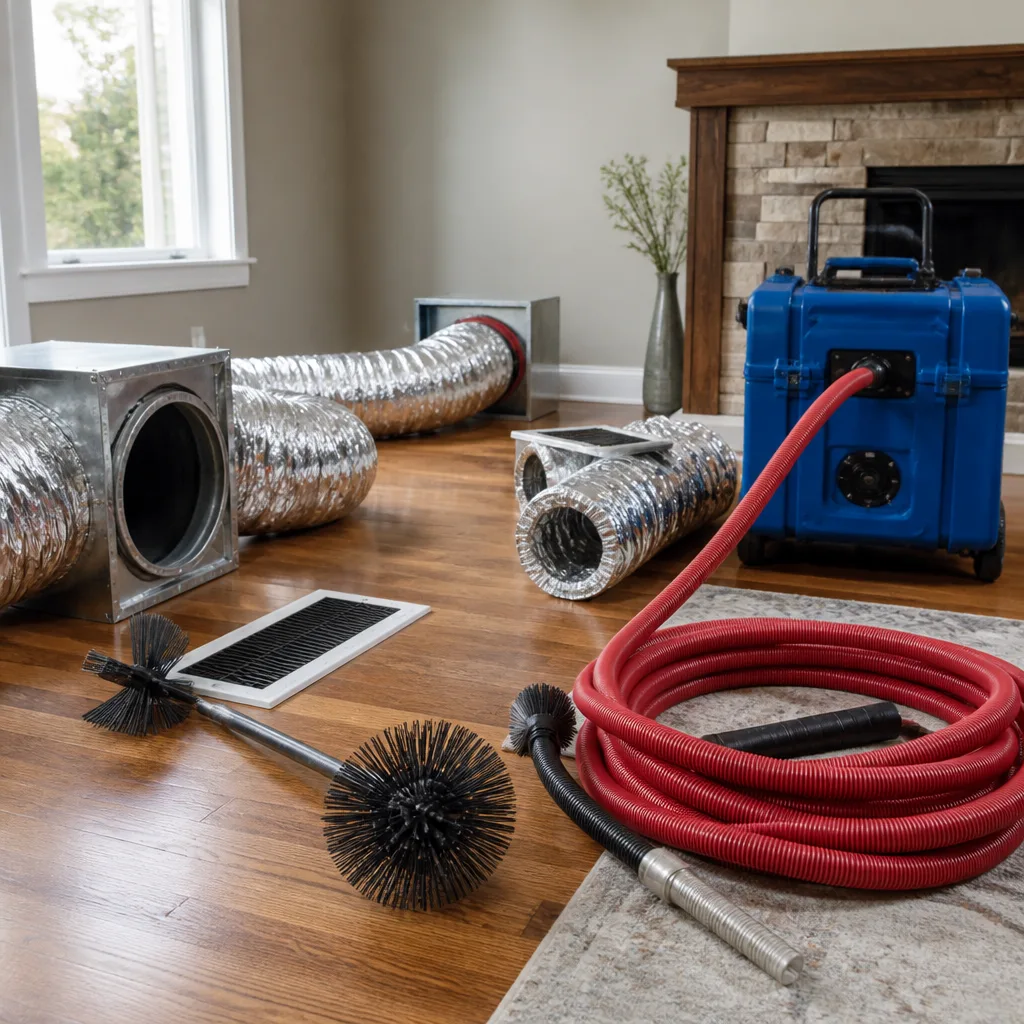 Whole-home duct cleaning
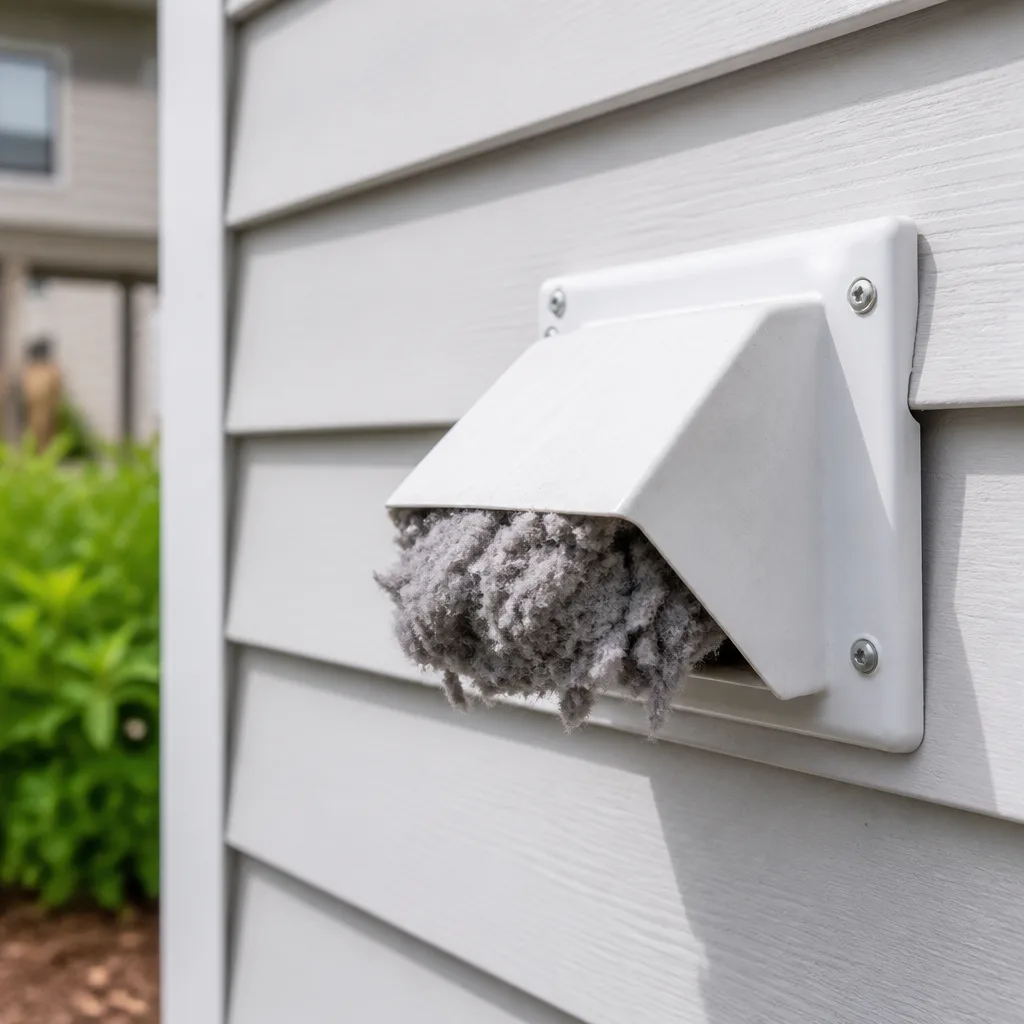 Dryer vent cleaning
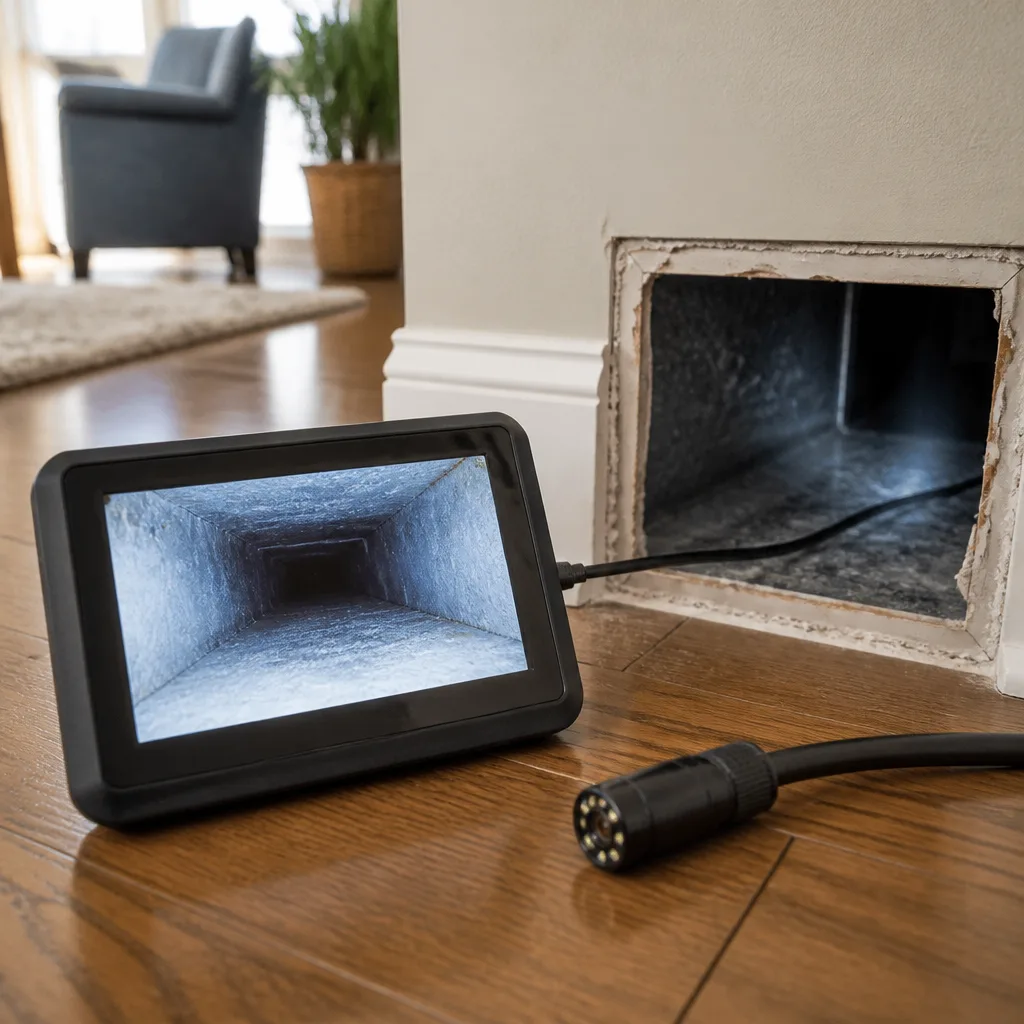 Camera inspection
 Sanitizing & deodorizing
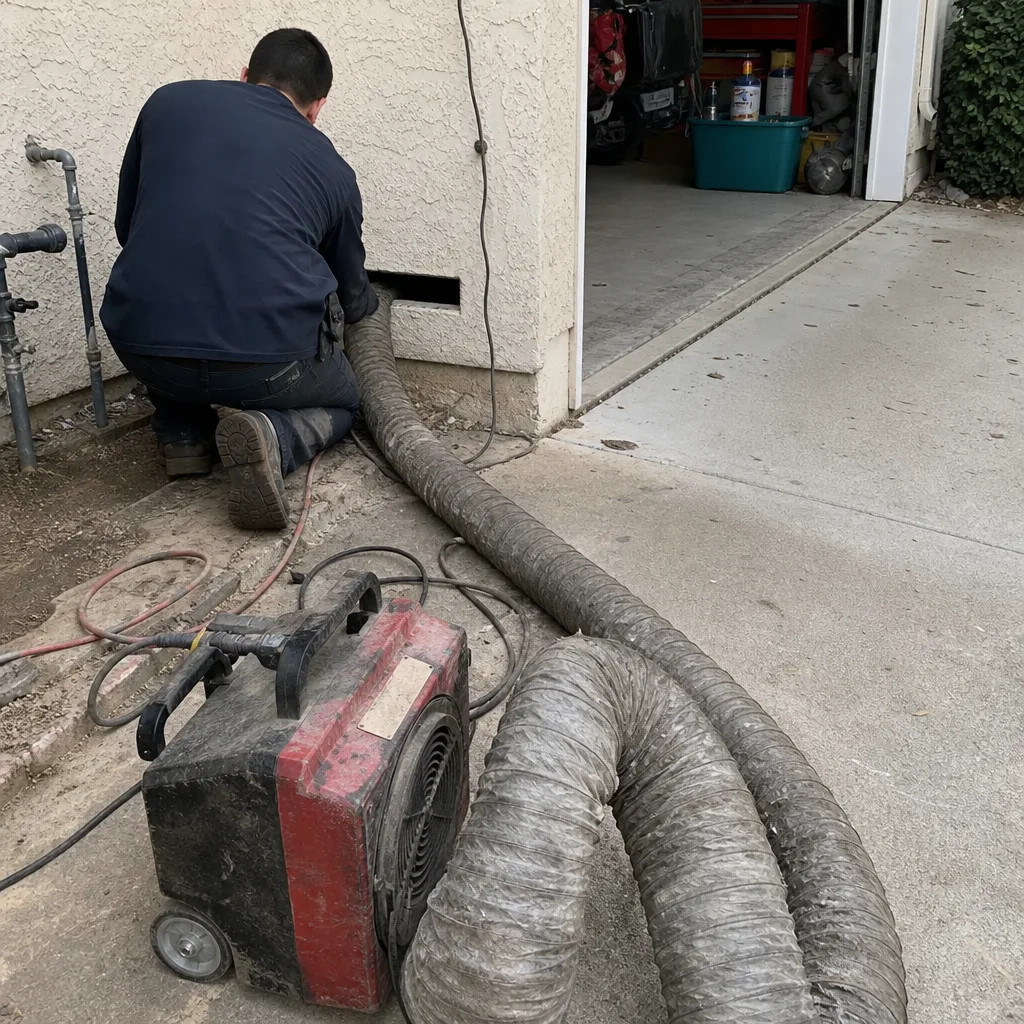
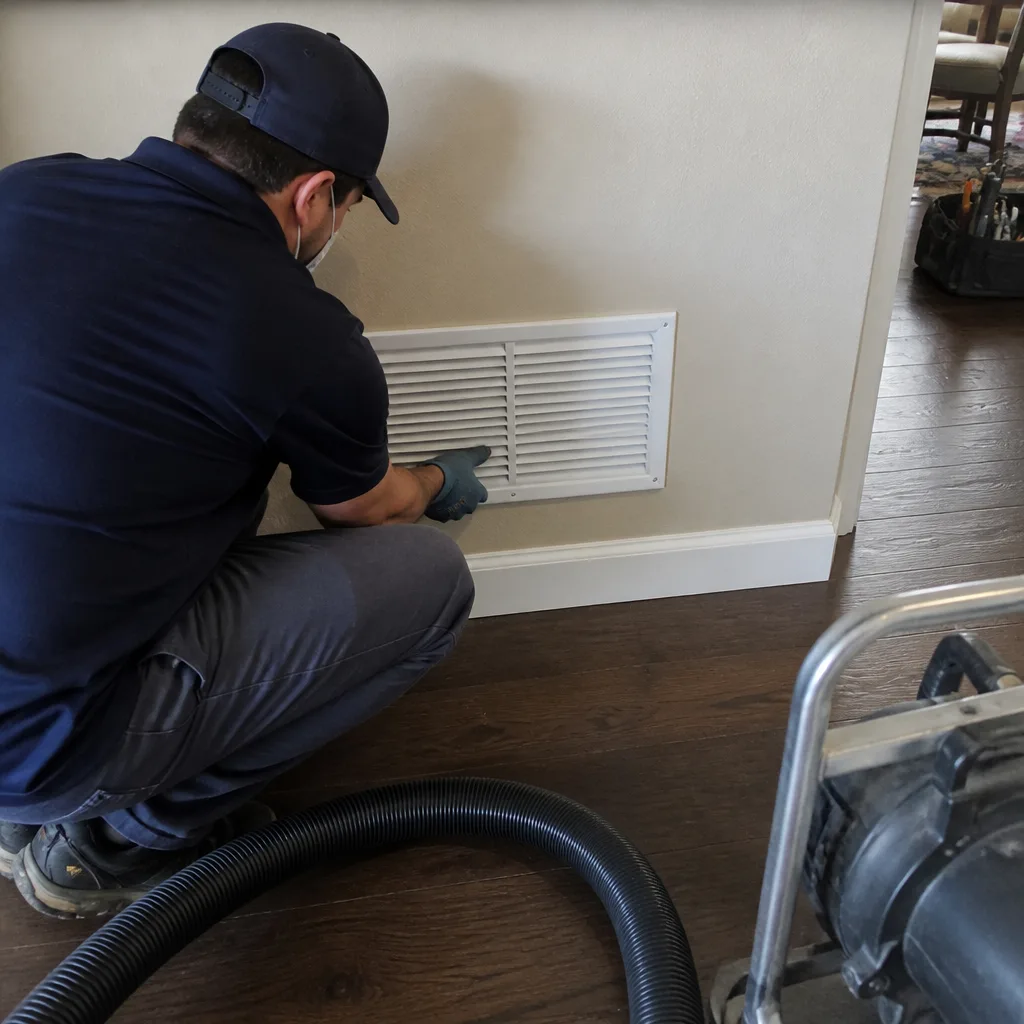
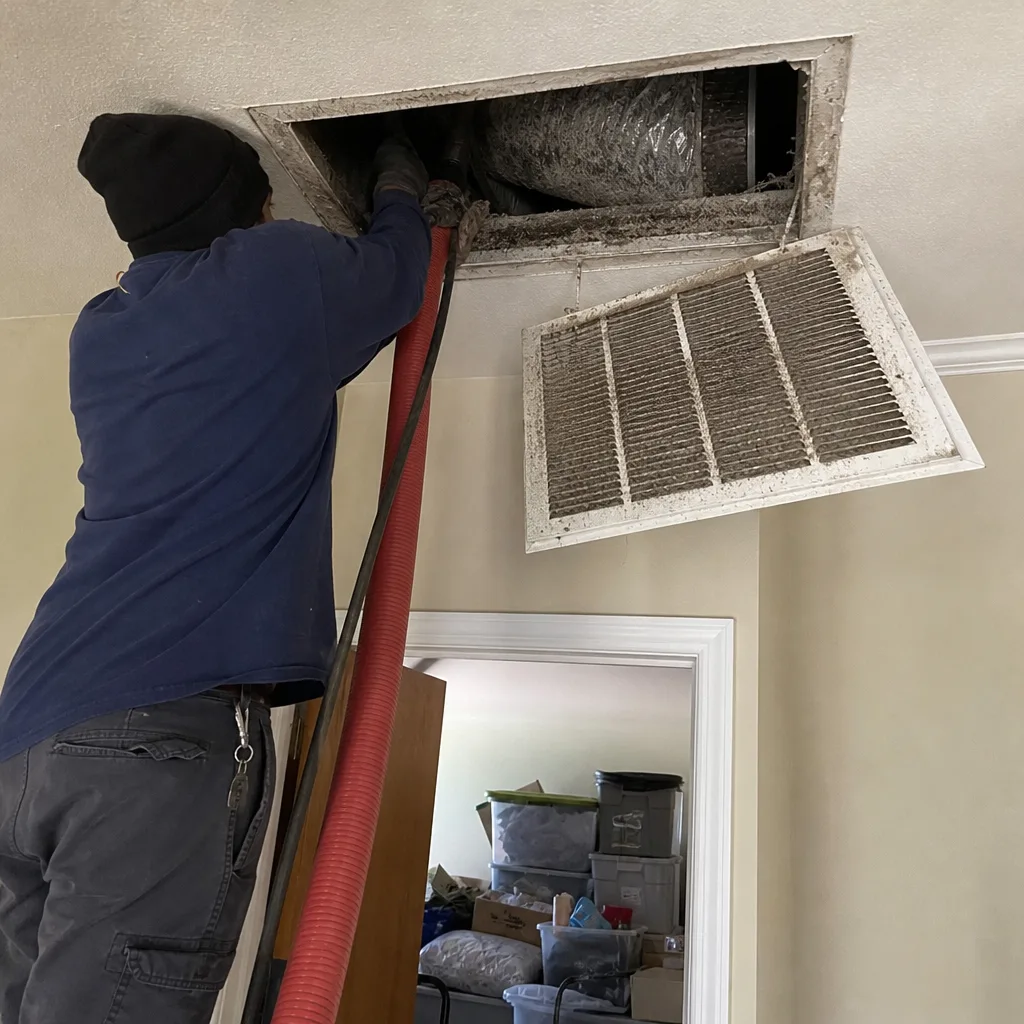
Whole-system duct and dryer vent check with before-and-after photos - you see exactly what came out of your vents
That "$99 whole-house special" is a bait ad - the real number appears once they are in your hallway, or the "clean" is a shop-vac at the register. We photograph the inside of your ducts before and after instead.
Air Duct Cleaning Permits, Codes & Inspections in CA: What You Need to Know
Most Brentwood homeowners assume a duct cleaning appointment is no different from hiring a carpet cleaner. That assumption works fine until the technician pops a duct connection loose, reseals it with the wrong material, and three years later a home inspector flags the work during a sale. California doesn’t require a permit to clean air ducts, but it absolutely regulates what happens when cleaning turns into modification, mold remediation, or reconnection. This guide walks through exactly where that line sits, what Contra Costa County enforces, and how to avoid inheriting someone else’s code violation. For related reading, see our Air Duct Cleaning Warning Signs: A Brentwood Homeowner’s Reference Guide.
Quick Answer
Air duct cleaning alone requires no permit anywhere in California, including Brentwood in Contra Costa County. However, permits and licensed contractors become mandatory the moment the work involves cutting into ductwork, modifying the air handler, reconnecting or sealing ducts with materials other than code-approved mastics, or performing mold remediation inside the system. Homeowners should verify what their cleaning company will and won’t touch before the job starts.
Styles & brands we work with
- Whole-home duct cleaning
- Dryer vent cleaning
- Camera inspection
- Sanitizing & deodorizing
Table of Contents
- Does Air Duct Cleaning Require a Permit in California?
- California Mechanical Code Section 504: Where Cleaning Ends and Modification Begins
- Mold Inside Ducts: When Cal/OSHA and CDPH Rules Kick In
- How Contra Costa County Treats Duct Sealing and Reconnection Work
- Seller Disclosure Rules: Unpermitted Duct Work During Real Estate Transactions
- What a Duct Cleaning Specialist Can Legally Do vs. What Needs an HVAC or Remediation Contractor
- Common Mistakes to Avoid
- When to Call a Professional
- Frequently Asked Questions
Does Air Duct Cleaning Require a Permit in California?
The short answer is no. Pulling a building permit from the City of Brentwood or Contra Costa County for routine air duct cleaning is not something any jurisdiction in California requires. Cleaning falls under maintenance, the same category as replacing a furnace filter or hosing out a condenser coil. The work removes accumulated dust, debris, and contaminants that already exist inside the system. It doesn’t alter the system’s structure, air flow design, or connection points.
But here’s the nuance that catches people off guard: what one company calls “cleaning” another company might call “repair.” If a technician discovers a separated duct joint and reattaches it, that’s a repair activity. If they decide to cut an access hole into the plenum to reach a deeper section, that’s a modification. If they peel back insulation to expose ducting and then rewrap it with a different material, that’s now touching the building envelope. None of those actions require a permit on their own in most cases, but they do move the work from unregulated maintenance into territory where California’s mechanical and building codes start to apply.
In our experience, the cleanest way to think about it: as long as the work is confined to removing debris from inside existing ducts and replacing access panels exactly as they were found, no permit is required and no license beyond a standard business registration is needed. The moment metal gets cut, connections get re-sealed, or the duct layout changes, the rules shift.
California Mechanical Code Section 504: Where Cleaning Ends and Modification Begins
California Mechanical Code (CMC) Section 504 governs air distribution systems, including ductwork installation, materials, and connections. While the code doesn’t address cleaning directly, it defines what constitutes an approved duct system, and any work that alters that system must comply with the code’s installation standards. This is the legal line that separates maintenance from construction.
Here’s what CMC Section 504 means in practical terms for a Brentwood homeowner:
- Duct connections must maintain their approved configuration. If cleaning dislodges a joint and the technician re-attaches it, the re-connection must match the original installation method. Using duct tape, a non-listed adhesive, or drywall screws into thin-gauge metal creates a code violation that a future inspector can flag.
- Access openings cut into ducts must be properly sealed and patched. If a cleaner cuts a hole for tool access, that opening must be closed with a code-approved patch material and sealed with UL-listed mastic or foil tape rated for HVAC use. A sheet-metal patch held on with general-purpose caulk will not pass inspection.
- Materials used inside the duct system must be non-toxic and code-compliant. Sealants, sanitizers, and encapsulants applied inside ducts fall under CMC scrutiny. Products not listed for HVAC interior use can introduce volatile organic compounds into the air stream, creating an indoor air quality problem worse than the dust that was removed.
- The duct system’s air balance cannot be altered without engineering review. Cleaning should never change damper positions, register sizes, or branch-run dimensions. If a technician closes off a supply register permanently or re-routes a branch line, that’s a design change subject to CMC compliance and potentially a permit.
We’ve seen this play out in Brentwood neighborhoods like Garin Ranch and Apple Hill Estates, where homes built in the early 2000s are hitting the age where original duct systems start showing separation at the boot connections. A routine Air Duct Cleaning services visit reveals the problem, and the homeowner has to decide between a proper repair and a quick fix that could come back to bite them later.
Mold Inside Ducts: When Cal/OSHA and CDPH Rules Kick In
Mold changes everything. Cleaning dust and debris out of ducts is unregulated maintenance. Removing mold from ducts is environmental remediation, and that’s a different category of work with different rules.
Here’s the regulatory chain that activates once visible mold growth is confirmed inside a duct system:
- California Department of Public Health (CDPH) guidance applies. CDPH has published indoor mold guidance that establishes when mold remediation exceeds routine cleaning. Visible mold growth covering more than 10 square feet, or mold in HVAC systems serving occupied spaces, falls under remediation protocol rather than janitorial cleaning.
- Cal/OSHA worker safety standards apply to the contractor. Anyone performing mold remediation must follow Cal/OSHA’s Aerosol Transmissible Diseases and respiratory protection standards. That means containment, negative air pressure where appropriate, and appropriate PPE. A duct cleaner who shows up to scrub visible mold without respiratory protection and containment is operating outside Cal/OSHA requirements.
- Licensed remediation contractors may be required. California does not have a statewide mold remediation license, but the scale and severity of the growth determine who can legally perform the work. Large-scale or toxic mold remediation typically requires a contractor with remediation experience, specialized equipment, and insurance that covers mold-related work. Standard duct cleaning insurance often excludes mold remediation claims.
- The source of the moisture must be corrected. CDPH guidance is explicit: mold remediation is incomplete if the underlying moisture problem isn’t fixed. In Contra Costa County’s dry-summer climate, mold in ducts most commonly traces back to condensate drain failures, humidifier overruns, or a disconnected bathroom exhaust vent dumping humid air into the duct system. Cleaning the mold without fixing the source guarantees recurrence.
For Brentwood homeowners, this means a visual inspection during a cleaning appointment is genuinely important. If a technician finds what looks like mold, that needs to be documented, the scope needs to be paused, and the homeowner needs a clear recommendation on next steps. Not every dark deposit in a duct is mold, but treating possible mold like ordinary dust is a liability no professional should accept.
How Contra Costa County Treats Duct Sealing and Reconnection Work
Contra Costa County’s building department, which handles permits for unincorporated areas and works in coordination with the City of Brentwood’s building division, treats duct work under the same mechanical permit framework as any other HVAC installation. The key distinction: sealing and reconnection work performed during a cleaning appointment is generally viewed as maintenance repair if it restores the system to its original condition, but any physical alteration to the duct layout or air handler requires a mechanical permit.
In practice, here’s how Contra Costa County approaches the work:
- Re-attaching a separated duct boot with code-approved fasteners and mastic sealant is a repair. No permit. No inspection. But the repair must use listed materials so a subsequent inspection doesn’t flag the work.
- Replacing a rusted-out duct section with new sheet metal of the same dimensions is a repair. If the replacement changes the duct’s size, direction, or length, that’s a modification requiring a mechanical permit.
- Adding new supply or return runs requires a permit, full stop. This includes splitting an existing run to serve a new room or enlarging a return to accommodate a larger air handler.
- Sealing duct leakage with aerosolized sealant – the pressurized sealant systems marketed as a “whole-duct seal” – falls in a gray area. Some jurisdictions treat it as maintenance, others as a modification because it changes the system’s pressure characteristics. Brentwood homeowners should verify current local interpretation before authorizing this service.
The practical risk isn’t the county showing up mid-cleaning. It’s the discovery later: a home inspector during escrow, an insurance adjuster after a water event, or a building official reviewing plans for a separate renovation. If they find duct work that was altered without a permit, the homeowner is responsible for correcting it regardless of which company performed the original work.
Seller Disclosure Rules: Unpermitted Duct Work During Real Estate Transactions
California real estate disclosure law is unforgiving about unpermitted work. The state’s Transfer Disclosure Statement (TDS) requires sellers to disclose all known material facts about the property, including unpermitted modifications. The Seller Property Questionnaire asks directly about work performed without permits. Failing to disclose creates liability that can survive the close of escrow.
Here’s how unpermitted duct work surfaces during a Brentwood home sale:
- Home inspection reveals the modification. Bay Area home inspectors routinely look at duct systems in attics and crawls. A visibly mastic-sealed patch job, mismatched sheet metal, or a new duct run that doesn’t match original construction gets written up as a possible unpermitted modification.
- The inspector recommends a specialist evaluation. Most general inspectors won’t determine code compliance. They recommend an HVAC contractor or duct specialist to evaluate the work. That evaluation either confirms the work is legitimate repair or flags it as an unpermitted alteration.
- The buyer requests disclosure and remediation. If the work is unpermitted, buyers typically request either retroactive permitting, corrective work, or a price concession. Retroactive permitting in Contra Costa County means opening walls or ceilings if the inspector can’t visually verify the duct work.
- If undisclosed, liability transfers to the seller. If the seller knew about the unpermitted work and failed to disclose it, the buyer can pursue damages for misrepresentation. The statute of limitations for failure to disclose starts when the buyer discovers the issue, not at close of escrow.
This is one of the strongest reasons to insist that any duct work performed in your Brentwood home uses code-approved materials and methods, even if it was initiated as a cleaning. The $200 saved on a lower-grade repair can become a $5,000 disclosure problem at sale time.
What a Duct Cleaning Specialist Can Legally Do vs. What Needs an HVAC or Remediation Contractor
This is the section that saves people from hiring the wrong company. Duct cleaning specialists, general HVAC contractors, and mold remediation contractors are not interchangeable. Each has a defined scope.
What a duct cleaning specialist can do without additional licensing:
- Remove accumulated dust, debris, and allergen particles from supply and return ducts
- Clean register covers, grilles, and accessible duct interior surfaces
- Vacuum the air handler cabinet, blower compartment, and evaporator coil surfaces
- Replace standard air filters with compatible replacements
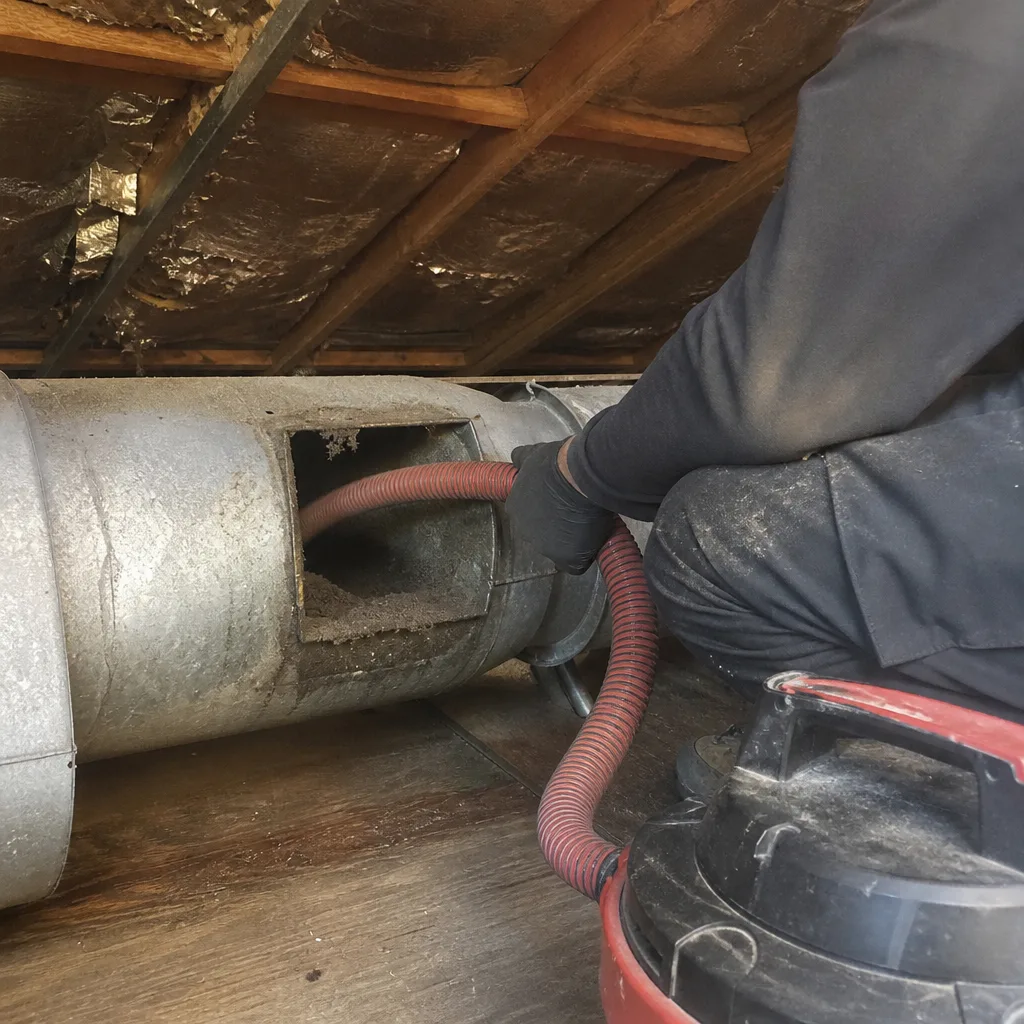
- Document findings with before-and-after photography
- Identify visible issues like separated joints, rusted sections, or suspected mold growth and flag them for the homeowner
What requires a licensed HVAC contractor:
- Cutting into or modifying existing ductwork beyond restoring original condition
- Replacing duct sections, boots, plenums, or the air handler itself
- Adding, removing, or re-routing supply and return runs
- Installing or modifying zoning dampers, bypass dampers, or automated controls
- Any work that changes the system’s static pressure or air flow design
- Installing or replacing furnaces, AC coils, heat pumps, or ventilation equipment
What requires a mold remediation specialist:
- Removal of confirmed mold growth covering more than 10 square feet
- Mold removal in HVAC systems serving occupied spaces where containment is required
- Any remediation involving biohazard protocols, negative air pressure, or antimicrobial treatment of duct interiors
- Post-remediation verification testing to confirm the system is clear
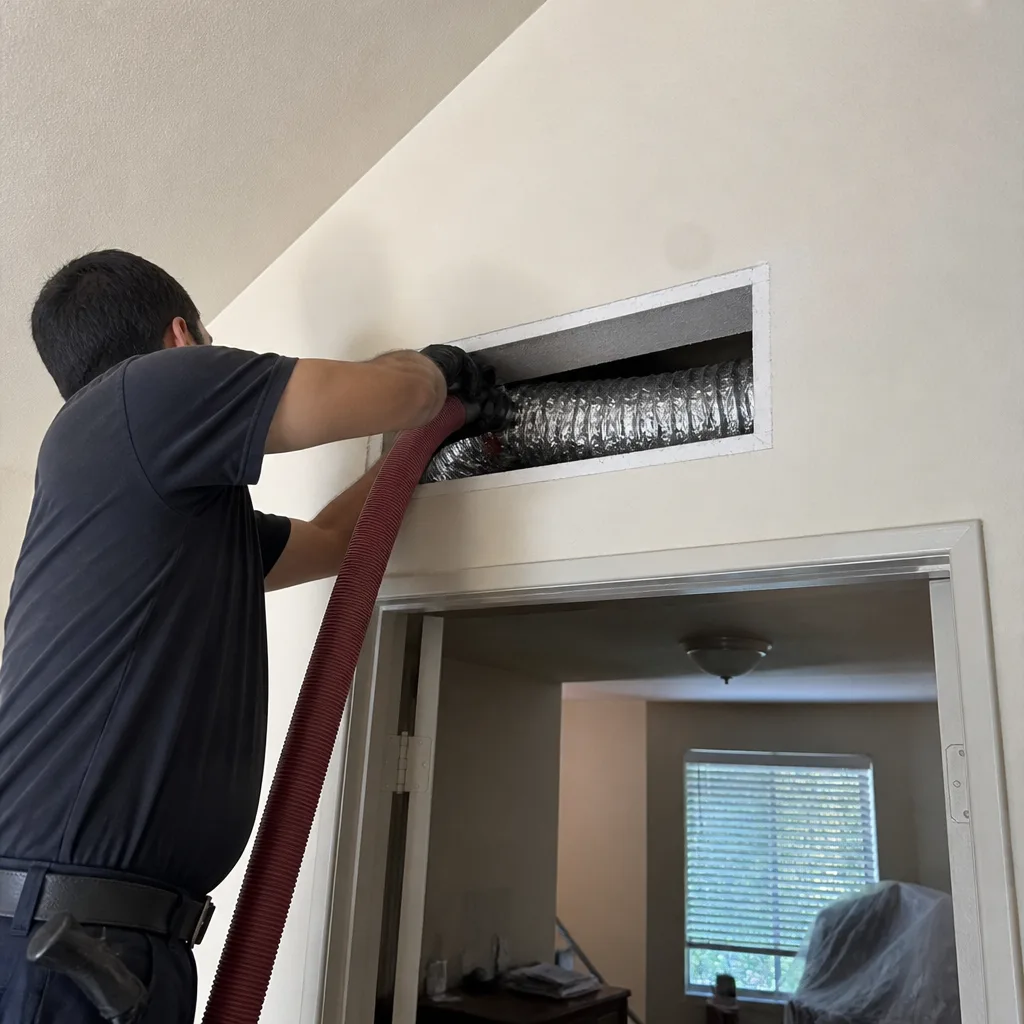
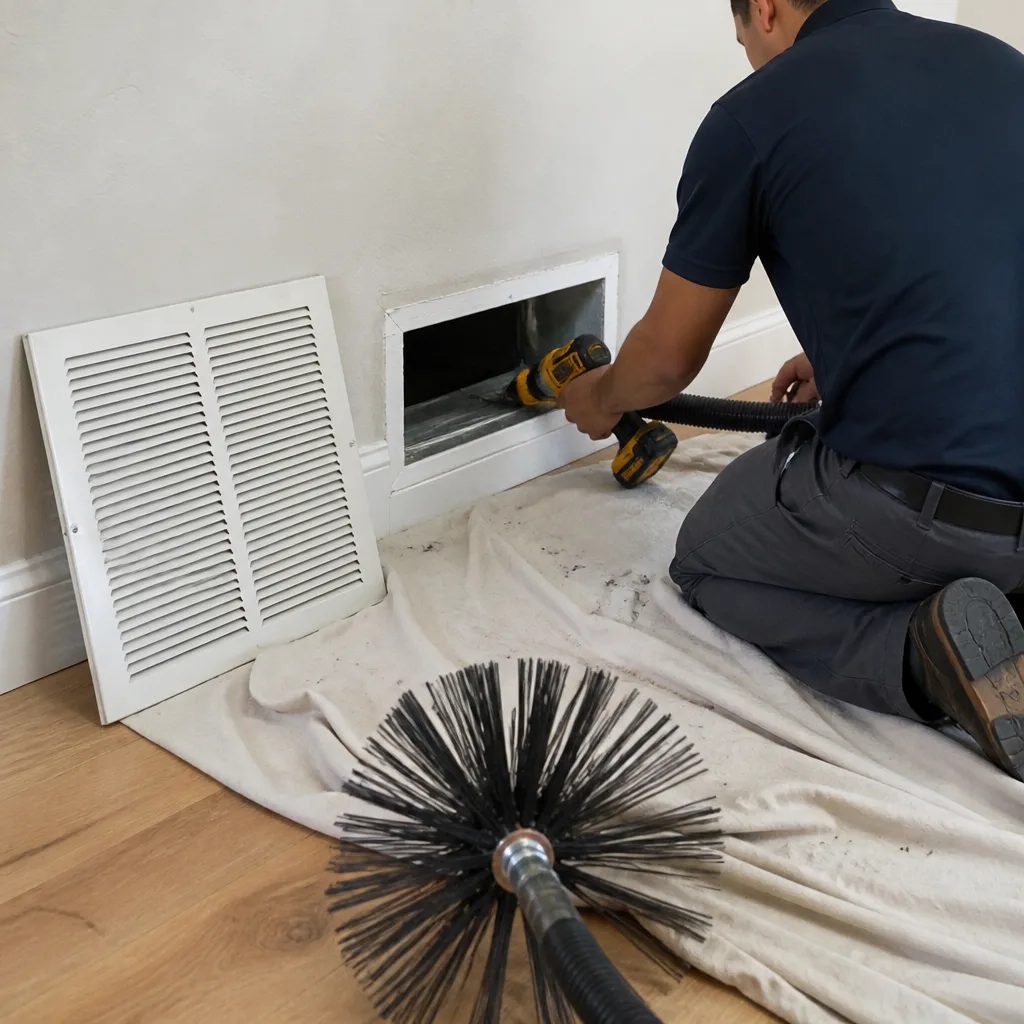
A properly positioned duct cleaning company knows these boundaries and works within them. We have no interest in performing unlicensed HVAC modifications, and we’ll always refer that work to a licensed contractor. What we do well is the cleaning itself, using professional-grade Rotobrush and Nikro systems that reach deep into the ductwork most Brentwood homes have never had properly cleaned. Check our Air Duct Cleaning Troubleshooting: Common Problems and How to Fix Them for what to expect.
For homeowners, the takeaway is simple: ask the company you’re considering what they will and won’t do. If they claim they can handle everything from deep cleaning to mold removal to custom duct fabrication, they’re either operating beyond their licensing or they’re a generalist doing multiple things at a mile wide and an inch deep. A specialist knows their lane.
Common Mistakes to Avoid
- Assuming all “duct cleaning” is the same scope. Some companies in the Brentwood area market basic surface vacuuming as full-system cleaning. Real cleaning involves accessing the full length of supply and return runs with agitation tools, not just wiping what’s visible at the registers.
- Letting a cleaner “patch” a duct with unapproved materials. Duct tape, general-purpose caulk, and spray foam are not code-approved for permanent HVAC sealing. If a technician reaches for any of these, stop the work. The repair will fail and become a disclosure issue.
- Authorizing mold “treatment” without confirming the scope. If a cleaning company offers to fog the ducts with an antimicrobial product, ask what the product is, whether it’s EPA-registered for HVAC use, and whether the underlying moisture source has been identified. Fogging mold without remediation protocol doesn’t solve the problem and introduces chemicals into your air stream.
- Skipping documentation. Before-and-after photos, a written service report, and a list of what was done (and what was flagged for follow-up) protect you at sale time. If the work can’t be documented, it didn’t happen as far as a future inspector is concerned.
- Choosing a generalist for specialist work. A general HVAC company that offers duct cleaning as one of fifteen services isn’t likely to deploy the same equipment as a dedicated duct specialist. The Rotobrush and Nikro systems used by specialized companies simply don’t fit into a generalist’s service van alongside furnace parts and refrigerant tanks.
- Ignoring the dryer vent. Dryer exhaust ducts are part of the home’s air-moving system, and lint build-up is a documented fire risk. The Dryer Vent Cleaning in Brentwood service we offer addresses a safety issue that standard HVAC contractors often skip over during duct work.
- Not verifying what happens if the cleaner finds a problem. Before the appointment, ask: if you find a separated joint, a rusted section, or suspected mold, what’s the protocol? A professional has a clear answer. A company that improvises on the spot is the one that creates unpermitted work.
When to Call a Professional
You should bring in a professional duct evaluation when you notice visible dust accumulating at registers within days of cleaning, when rooms heat or cool unevenly despite a properly sized system, or when you suspect a renovation project introduced construction debris into the duct system. If a home inspection, insurance adjuster, or energy auditor has flagged duct concerns, a specialist assessment is the next step. And if anyone in the household has unexplained allergy symptoms that worsen when the system runs, that’s a signal worth acting on. Duct Cleaning Brentwood offers free estimates in Brentwood – call (833) 631-4988. Browse our more guides & resources for additional homeowner tips. We’ll evaluate the system, document what we find, and give you a straight answer on what needs cleaning versus what needs a licensed contractor.
Frequently Asked Questions
No. Routine air duct cleaning is considered maintenance and requires no building permit in Brentwood or anywhere else in California. The work removes accumulated dust and debris without altering the duct system’s structure or configuration.
A mechanical permit is required when duct work involves adding new supply or return runs, changing duct sizes or routing, modifying the air handler, or altering the system’s air flow design. Simple repairs that restore the system to original condition generally do not require a permit.
Pause the cleaning scope and get a clear assessment. Visible mold growth inside ducts triggers CDPH remediation guidance and Cal/OSHA worker safety requirements. The moisture source must be identified and corrected, and the remediation work may require a specialist. A professional cleaner will document the finding and advise on next steps rather than spraying an unverified product and calling it done.
Yes, re-attaching a separated duct boot with code-approved fasteners and mastic sealant is considered a repair and requires no permit. However, the repair must use listed materials and restore the original configuration. If the technician uses unapproved materials or alters the duct’s path, that creates a code issue.
Home inspectors flag visible duct modifications during escrow, and California’s Transfer Disclosure Statement requires sellers to disclose known unpermitted work. Undisclosed unpermitted duct modifications can create post-sale liability. Correcting the work retroactively may require opening walls or ceilings for inspection.
Whole-system air duct cleaning in Brentwood typically ranges from $450 to $900 for an average single-family home, depending on system size, accessibility, and the level of contamination. Homes with multiple systems, extensive runs, or significant debris accumulation run higher. Call (833) 631-4988 for an exact quote – estimates are free, and we’ll confirm scope before any work begins. For a deeper look at what’s involved, see our Air Duct Cleaning in Brentwood page.
The Bottom Line
Air duct cleaning in California sits outside the permit system, and that’s appropriate. Cleaning is maintenance. But the line between maintenance and modification is thinner than most homeowners assume, and crossing it without knowing has consequences that surface during home sales, insurance claims, and future inspections. Know what your cleaning company will and won’t touch, insist on code-approved materials for any repair work, and understand that mold changes the scope entirely. For Brentwood homeowners who want a specialist that works within that legal framework using professional-grade equipment, we’re here to help. Call (833) 631-4988 for a free estimate, or visit our Duct Cleaning Brentwood home page to learn more about what we do. If you have a duct system that’s already showing wear beyond what cleaning can address, our Air Duct Repair in Brentwood service covers that scope properly.
Written by the team at Duct Cleaning Brentwood, serving Brentwood since 2018.
See the difference
 Before
 After
 Before
 After
 Before
 After