
Last updated November 2, 2026
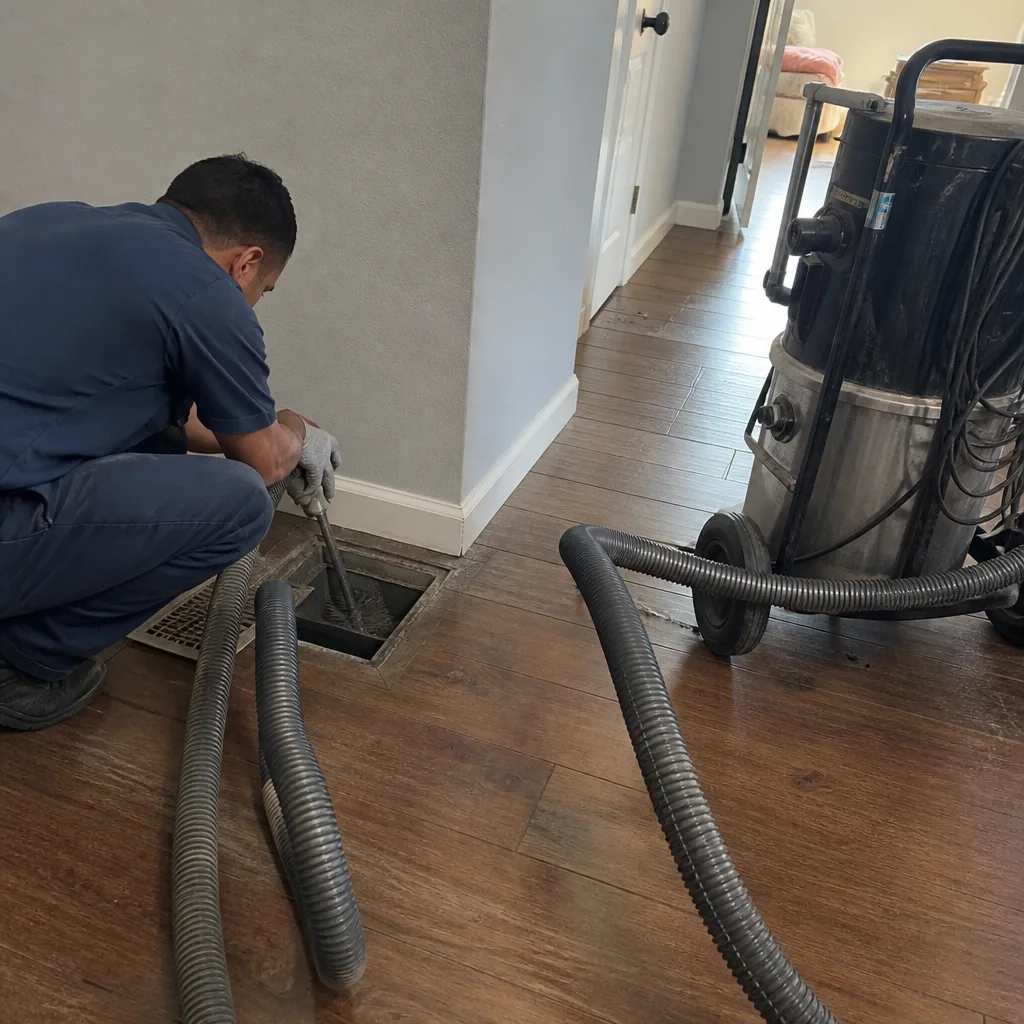
 Whole-home duct cleaning
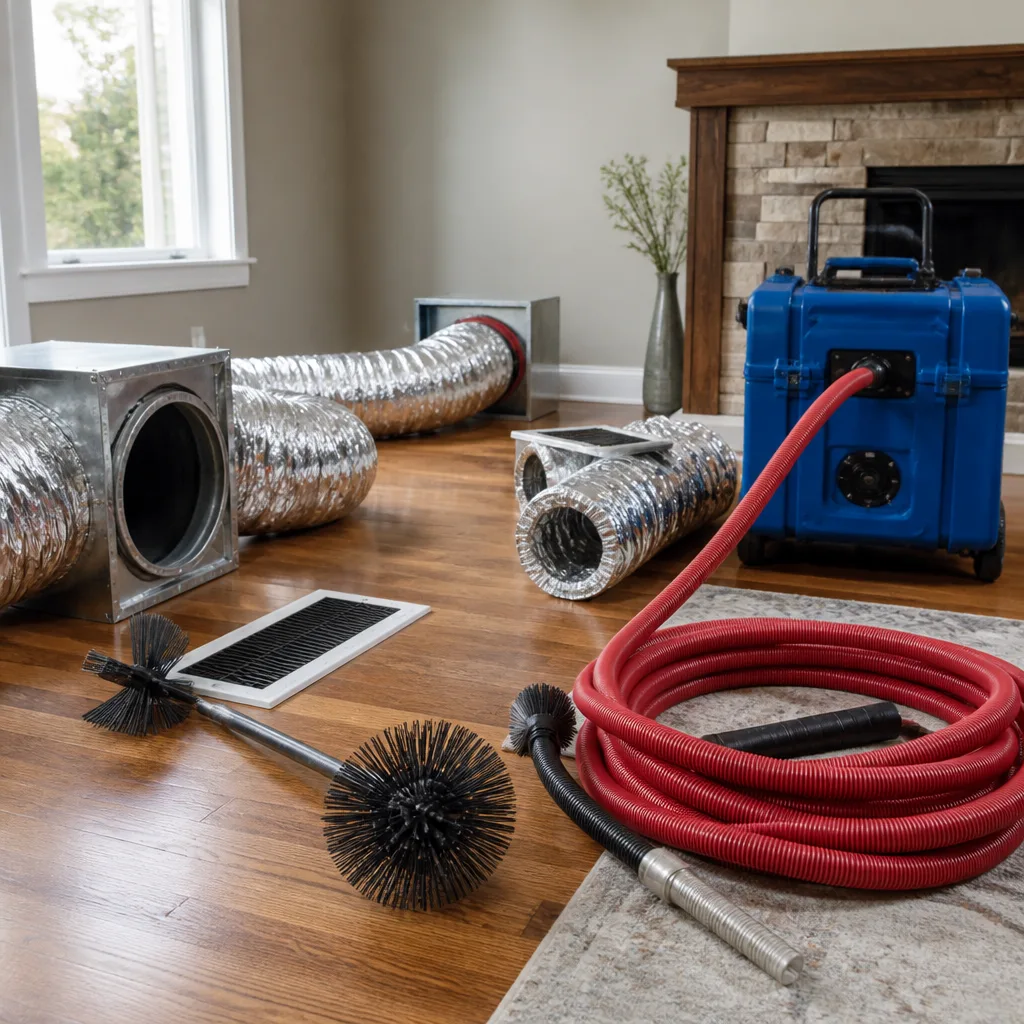
 Dryer vent cleaning
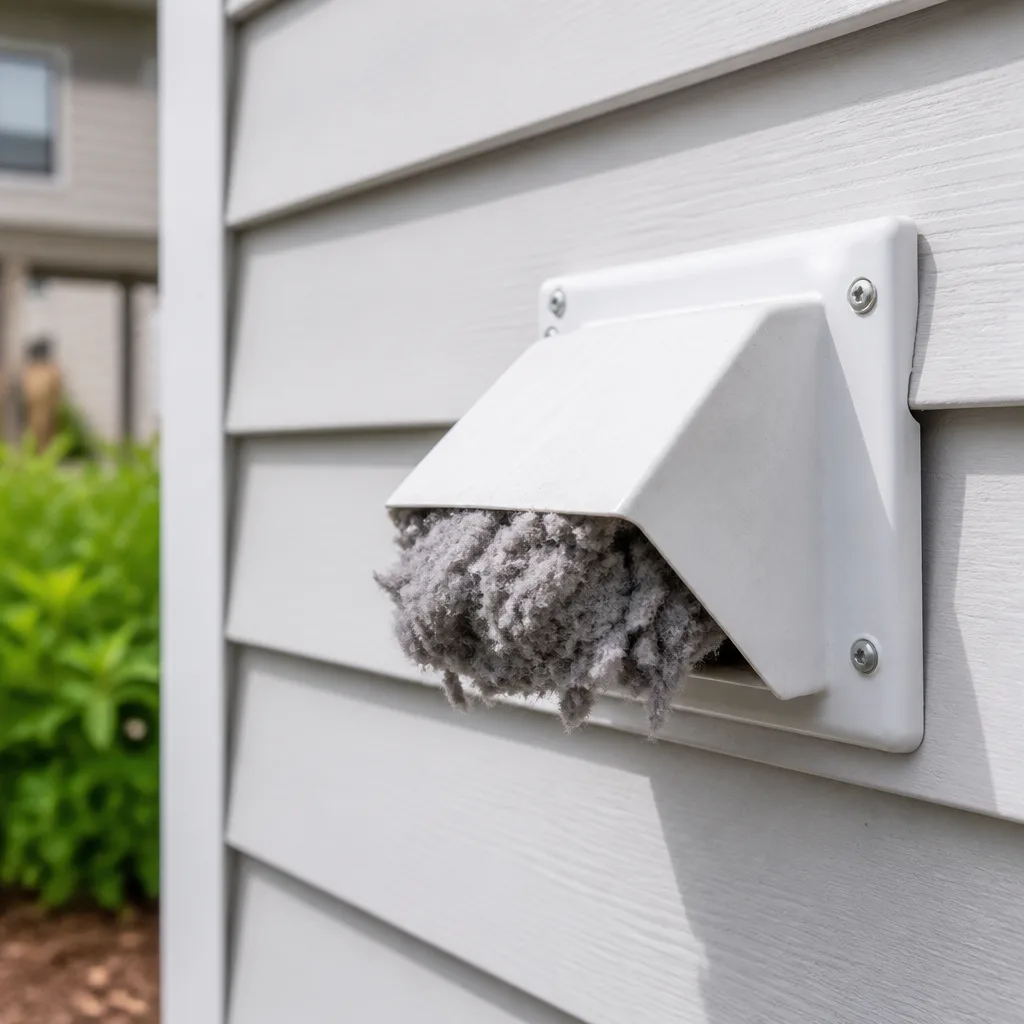
 Camera inspection
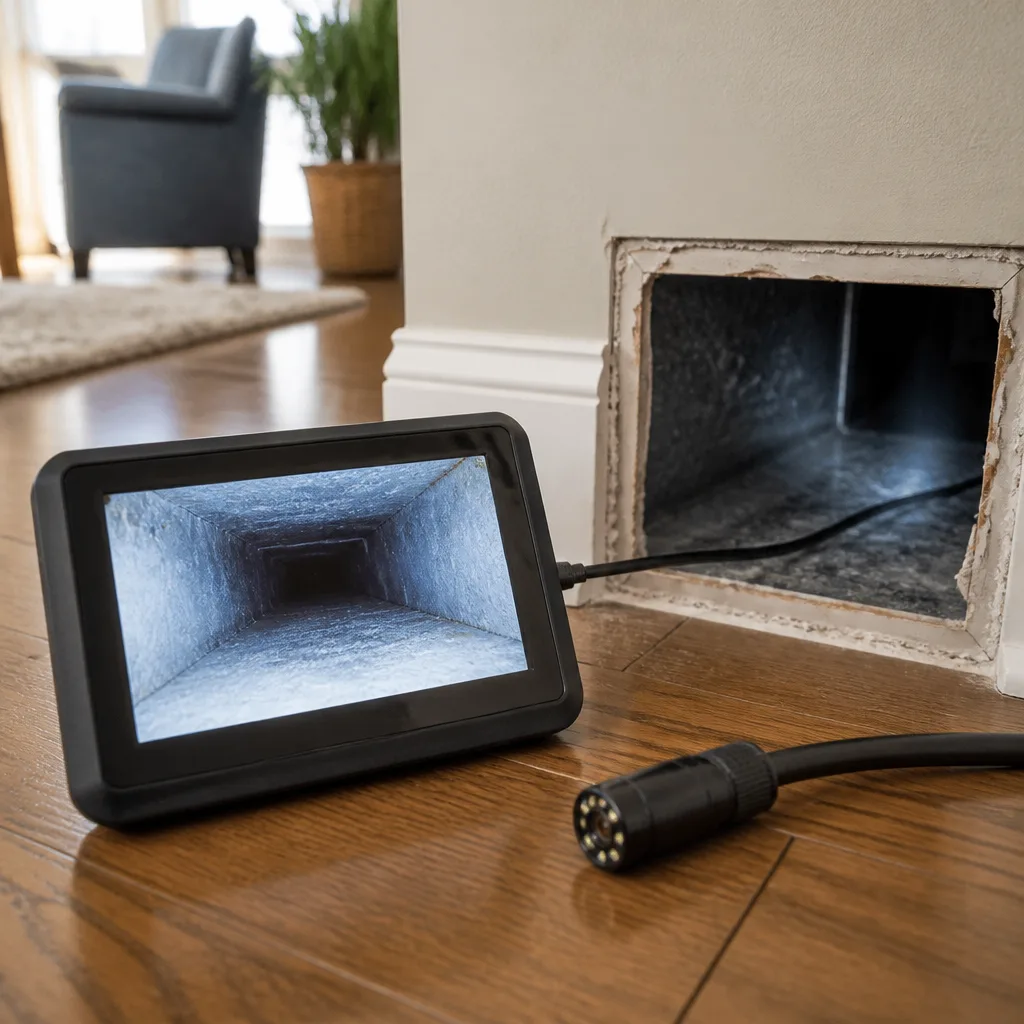
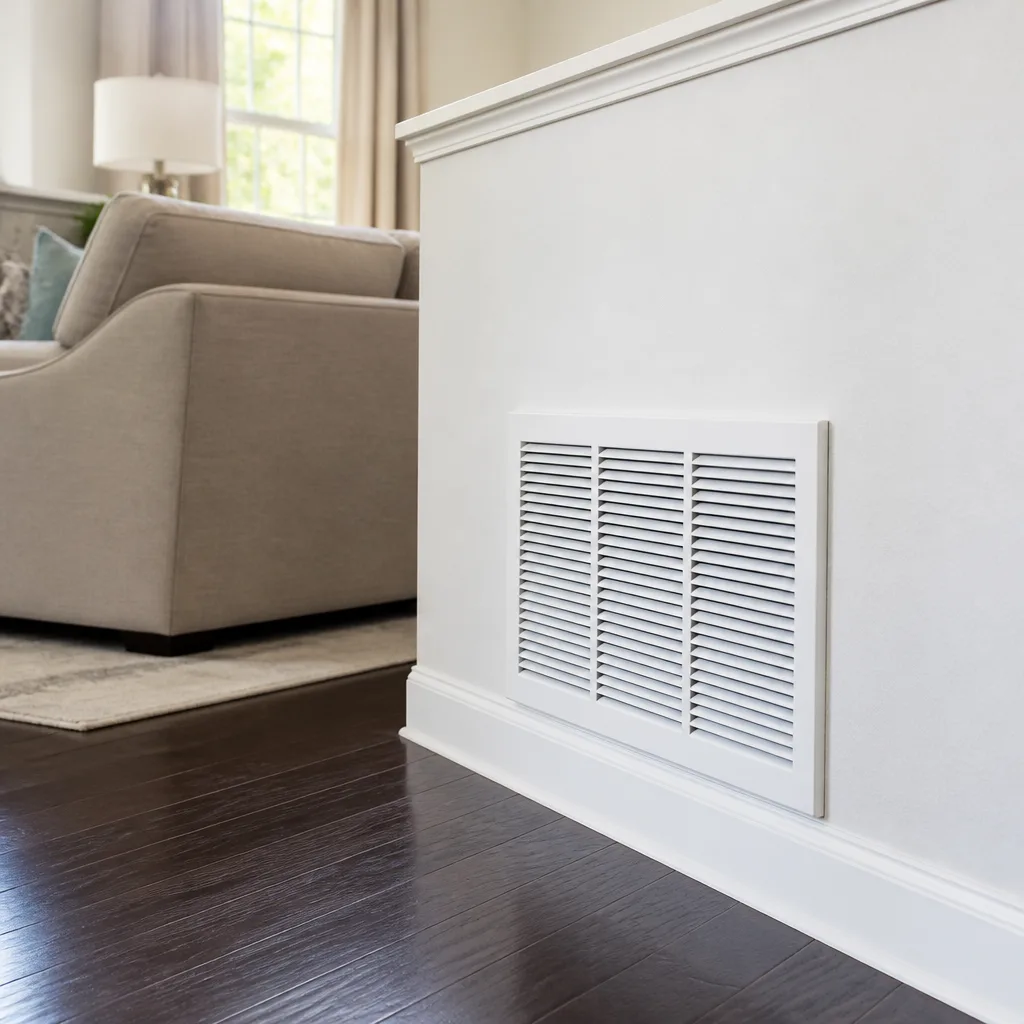 Sanitizing & deodorizing
Whole-system duct and dryer vent check with before-and-after photos - you see exactly what came out of your vents
That "$99 whole-house special" is a bait ad - the real number appears once they are in your hallway, or the "clean" is a shop-vac at the register. We photograph the inside of your ducts before and after instead.
Air Duct Cleaning Troubleshooting: Common Problems and How to Fix Them
Here’s a statistic that surprises most homeowners: roughly 40% of the “duct cleaning didn’t work” calls we field in Brentwood involve ducts that were cleaned perfectly well. The problem was never dirt. The problem was a missed diagnostic step, a disconnected flex line knocked loose during the job, or moisture that no amount of brushing will ever fix. That’s the gap this guide closes. We’ll walk you through a structured symptom-to-cause process so you can figure out whether you need a redo, a repair, or a different service entirely. If you’re in Brentwood, CA and your allergy symptoms or musty odor returned within weeks of a cleaning, the answer is probably not what you were told it was.
Quick Answer
When air duct cleaning doesn’t solve your problem, the cause is almost always one of five things: moisture intrusion feeding mold re-growth, a dislodged or leaking flex duct connection, a dirty blower wheel that was outside the cleaning scope, an unsealed duct pulling attic or crawlspace air into the living space, or an upstream HVAC component like a coil or heat exchanger that was never addressed. The fix starts with identifying which symptom you have, matching it to the likely cause, and then deciding between a targeted repair, a more thorough cleaning with equipment that actually reaches branch lines, or an IAQ upgrade. In Brentwood’s dry summer heat and winter delta breeze conditions, moisture problems typically trace to specific sources we can pinpoint.
Styles & brands we work with
- Whole-home duct cleaning
- Dryer vent cleaning
- Camera inspection
- Sanitizing & deodorizing
Table of Contents
- Odor Returning Within Weeks: It’s Moisture, Not Dirt
- Weak Airflow After Cleaning: The Dislodged Connection Problem
- Allergy Symptoms That Persist: Three Hidden Causes
- How to Verify the Previous Cleaning Actually Reached Your Branch Lines
- When a Second Cleaning Is the Right Call
- When the Problem Is Upstream: Coils, Humidifiers, and Heat Exchangers
- Brentwood-Specific Factors That Affect Duct Performance
Odor Returning Within Weeks: It’s Moisture, Not Dirt
If you paid for air duct cleaning and the musty smell came back within 30 to 60 days, dirt was never your problem. Microbial re-growth requires three things: organic food (dust, skin cells, pet dander), a surface to colonize, and sustained moisture. A thorough cleaning removes the first two. It does nothing about the third. In our experience across Brentwood homes, the moisture source is almost always one of these:
- Condensate pan overflow or slow drain: The evaporator coil sits above your furnace or air handler, and its drain pan collects condensation. If the drain line is partially clogged, water backs up into the cabinet and wicks into surrounding duct insulation.
- Duct sweating in unconditioned attics: Brentwood regularly hits 100°F in July and August. When a cool duct runs through a hot, humid attic with inadequate insulation wrap, condensation forms on the exterior. That’s a water source sitting against the duct for hours every day.
- Humidifier left running year-round: A bypass humidifier that never gets shut off or cleaned deposits mineral scale and keeps moisture flowing into the supply plenum. The smell reads as mildew but the source is the humidifier media pad.
- A disconnected bathroom exhaust fan: If the fan vent terminates in the attic instead of through the roof, every shower pumps warm, humid air directly into the duct environment. This is more common in older Brentwood homes built before 1990 than most homeowners realize.
- Rodent entry with urine saturation: Rats and squirrels in attic ductwork don’t just chew holes. They nest. Urine-soaked insulation inside a duct liner won’t come clean with brushing; it needs section replacement.
The diagnostic step most people skip is simple: check whether the odor is present when the system is off versus only when the blower runs. If it’s constant, moisture is sitting in the ducts themselves. If it only appears with airflow, the moisture is in the equipment cabinet. That single observation narrows the problem source by half before anyone opens an access panel. Our Air Duct Repair in Brentwood service focuses on fixing what’s broken rather than cleaning around it, because re-cleaning a duct that’s still getting wet will fail every time.
Weak Airflow After Cleaning: The Dislodged Connection Problem
Here’s an uncomfortable truth: some duct cleaning methods can reduce airflow. When a technician uses aggressive agitation tools or negative-pressure equipment without properly securing branch line connections, flex duct can pull loose from the trunk line collars. The result is conditioned air being pumped into the attic or crawlspace instead of your living room. The room that was previously warm in summer or cold in winter gets noticeably worse within days of the cleaning.
What to look for at each register:
- Hold a tissue or thin paper over the register with the system running: If it barely flutters compared to other registers in the home, that branch line has a problem.
- Compare airflow between rooms: A single weak room points to that specific branch line. Every register weak points to a blower, filter, or main trunk issue.
- Check the ceiling below the attic: If the duct came loose from a boot, you may feel air moving where you shouldn’t. Shine a flashlight into the register and look for a visible gap between the metal boot and the flex duct.
- Look for crushed or kinked flex runs: Technicians working in an attic sometimes move flex duct to get around it and bend it sharply enough to collapse the inner liner. This restricts airflow even when the connection is intact.
A collapsed or badly kinked flex duct won’t fix itself. The appropriate repair is either reconnecting the flex to the boot with a proper zip tie and mastic seal, or replacing the damaged section. This is why our technicians use Duct Cleaning Brentwood home inspection cameras to document every branch line before and after the job. If we knock something loose, we see it and fix it before we leave. If someone else knocked it loose, we can show you the photo evidence.
Allergy Symptoms That Persist: Three Hidden Causes
When a homeowner calls us in Brentwood saying allergy symptoms still kick up every time the AC runs, even after a duct cleaning, we look at three things the cleaning probably never touched. These are the missed diagnostic steps that separate a real fix from another futile pass.
1. The blower wheel was never cleaned. Duct cleaning covers the ducts. It doesn’t cover the blower wheel inside the furnace cabinet. This wheel is a metal squirrel-cage fan that moves air through the whole system. After years of service, it collects a baked-on layer of dust, pet hair, and cooking grease. Every time it spins, it flings microscopic particles into the airstream. If your ducts were cleaned but the blower wheel still looks like a dust bunny exploded inside it, your allergen source hasn’t gone anywhere. Cleaning a blower wheel requires pulling the blower assembly and using a specific brush and vacuum process. It’s a separate service from duct cleaning with most companies.
2. Return-side duct leakage is pulling attic air. A duct can be clean and still not clean the air because it’s leaking. When return ducts in a hot attic have unsealed joints, the negative pressure pulls in attic air: fiberglass particles, pest waste dust, and whatever else lives up there. The air that comes out of your supply registers is a mix of clean conditioned air and unfiltered attic air. We’ve used Abatement Technologies particulate testers on Brentwood homes where visibly clean ducts were still delivering elevated particle counts, and the culprit was return-side leakage every time. Sealing those joints with mastic is an Air Duct Repair job, not a cleaning job.
3. Your filter is undersized or bypassing. A 1-inch fiberglass filter in a standard 1-inch filter slot catches maybe 20% of airborne particles. If the filter frame is loose, air flows around it entirely. No duct cleaning compensates for air that never touches a filter. Homes in Brentwood with high pollen seasons in spring and agricultural dust from surrounding Contra Costa farmland need MERV 11 or higher in a properly sealed filter cabinet. We stock Honeywell and Aprilaire filtration components because the filter slot on most residential systems is the weakest link in IAQ, and upgrading it is a half-hour fix that changes measurable air quality.
How to Verify the Previous Cleaning Actually Reached Your Branch Lines
Most duct cleaning companies work on time pressure: get in, get out, next job. The main trunk line gets clean. The branch lines that run to each room? That’s where shortcuts happen. Here’s how to check whether the last cleaning actually touched the far reaches of your system.
The camera test, as we’d perform it:
- Request before-and-after photos or video: Any legitimate duct cleaning company in Brentwood using professional-grade equipment has a camera scope. Nikro systems, which we run, include inspection camera capabilities. If they can’t show you what it looked like before and after, they didn’t document it because they didn’t verify it.
- Inspect accessible branch line openings: In many homes, you can remove a supply register and look into the duct with a flashlight. A clean branch line shows bare metal or clean flex liner. If you see dust caked on the walls 6 feet from the register, the cleaning didn’t reach it.
- Check the flex duct interior where visible: Through a removed grille, look at the inner walls of the flex duct. If it has a grey film still attached after the cleaning, the agitation and vacuum didn’t reach that section.
- Ask about the cleaning method: A truck-mounted vacuum hooked to the main trunk will clean the trunk. Reaching branches requires lightweight agitation tools run through each branch from the supply side. If they didn’t describe that step, they probably didn’t do it.
Our process uses Rotobrush and Nikro systems, which are contractor-grade cleaning equipment, not big-box vacuums or improvised tools. Here’s what “reaching the branch lines” actually looks like in practice: the Rotobrush agitator spins through each branch run from the register side while the Nikro negative-air machine maintains constant vacuum throughout the system. One pass per branch does nothing; good cleaning takes multiple passes on the most-contaminated lines. When you’re getting a professional air duct cleaning in Brentwood, ask whether they clean every branch line individually or just run a vacuum from the plenum. The answer tells you what you’re actually paying for.
When a Second Cleaning Is the Right Call
There are scenarios where a second cleaning is appropriate, and there are scenarios where it’s a waste of money. The distinction matters, because we’ve met too many Brentwood homeowners who were sold a second cleaning when what they needed was a repair.
A second cleaning is likely the right call if:
- You can visually confirm, through register inspection or camera footage, that the first pass missed significant portions of the branch lines.
- The first cleaning was performed with a shop-vac or “blower and vacuum” approach with no mechanical agitation and no evidence of branch-line work.
- New contamination entered the system after the cleaning: a renovation project, a pest intrusion that’s since been sealed, or a one-time event like a construction dust surge.
- The cleaning removed heavy debris but left a dust film on surfaces because the agitation was insufficient for the debris load.
A second cleaning won’t help if:
- The odor is moisture-driven and the moisture source is still active. The smell will return in weeks regardless of how thoroughly the ducts are cleaned.
- The allergy symptom is caused by a dirty blower wheel, leaky return ducts, or a bypass filter. The ducts are clean; the air path around them is the issue.
- Airflow is weak because a flex connection is loose or a liner has collapsed. Cleaning won’t reconnect a duct.
- The problem is an HVAC component failure: a cracked heat exchanger, a failing blower motor, or a frozen coil.
If you’re not sure which category you’re in, document your symptoms first. A quick home test: run the system for 20 minutes with a new filter, then check each room’s airflow and odor separately. If airflow is uneven room-to-room, think repair. If odor is present only when the AC cycles, think moisture. If particles are visible at the registers, think cleaning. These observations will guide any honest technician’s recommendation.
When the Problem Is Upstream: Coils, Humidifiers, and Heat Exchangers
Ducts are a delivery system. They carry air that’s already been conditioned, filtered, and moved by equipment in the main cabinet. When that equipment is dirty, failing, or misconfigured, clean ducts can’t compensate. Here are the upstream components that get mistaken for duct problems:
Fouled evaporator coil: The coil sits in the airstream just above the blower. Over time it collects a mats of dust and pet hair that reduces efficiency and harbors mold when saturated. Cleaning the coil requires a chemical treatment and wash-down process, not duct brushing. A coated coil also restricts airflow, mimicking duct blockage.
Scaled humidifier pad: A bypass humidifier in Brentwood homes running from a hard water supply builds mineral scale on the media pad. The scale reduces moisture output and the pad itself becomes a substrate for biological growth. The smell from a moldy humidifier pad travels through the entire duct system and reads as “dirty ducts.” Replace the pad, clean the humidifier frame, and the odor clears.
Cracked heat exchanger: In gas furnaces, a cracked heat exchanger is both a safety hazard and a source of odors that persist after cleaning. The crack allows combustion byproducts to mix with conditioned air. If you smell something acrid or “burned” only when the furnace runs, stop operating the system and have the heat exchanger inspected. This is not a duct issue and no amount of cleaning addresses it.
Dirty secondary heat exchanger or burner assembly: Even without a crack, accumulated debris on burners produces incomplete combustion and a burnt-dust smell at the start of heating season. The ducts are downstream of the problem.
We carry Abatement Technologies air-quality products precisely because half of persistent IAQ complaints trace back to equipment issues, not duct contamination. A particulate count taken at the return versus the supply tells you whether your system is adding particles or removing them. In our air duct cleaning work across Brentwood, we routinely find that homes with persistent symptoms need a coil cleaning, a filter upgrade, or both. The ducts were never the whole picture.
Brentwood-Specific Factors That Affect Duct Performance
Brentwood’s climate creates specific patterns we see repeated across the area’s duct systems. Understanding these local factors helps homeowners figure out whether what they’re seeing is normal or needs attention.
Hot attic summers: From June through September, Brentwood attic temperatures routinely exceed 130°F. In those conditions, any gap in duct insulation or connection seal gets punished. The temperature differential between conditioned supply air at 55°F and attic air at 130°F creates condensation at every weak point. Homes in neighborhoods like Garin Ranch, Summerset, and Deer Ridge all contend with this, but older sections built before modern insulation standards see the worst condensation problems.
Delta breeze evenings: Brentwood’s evening breeze pulls cooler marine air through the area, creating rapid temperature swings. These swings stress duct materials: rigid metal ducts expand and contract, fiberglass insulation shifts, and connections that were tight in winter loosen by August. Seasonal re-inspection of duct connections is a practical maintenance step for Brentwood homeowners.
Agricultural dust load: Surrounding Contra Costa and San Joaquin County farmland produces harvest-season particulate that settles into outdoor air intakes and works into duct systems through leaks and unsealed filter racks. Homes near the agricultural boundary on Brentwood’s east side consistently show higher particulate deposition in return ducts during late summer and fall.
Hard water effects: Brentwood’s municipal water has significant mineral content, which shortens humidifier pad life and accelerates scale buildup in evaporative equipment. If your home runs a whole-house humidifier, expect to replace the pad annually and descale the frame more frequently than manufacturers suggest for softer-water regions.
These local factors shape the troubleshooting process because they change the probability of each root cause. A musty odor in a Brentwood attic in August is most likely condensation-driven. The same odor in January is more likely a plumbing or HVAC drainage issue. Context changes diagnosis.
Common Mistakes to Avoid
- Assuming a musty odor means dirty ducts and scheduling another cleaning automatically. Moisture feeds the problem; cleaning treats the symptom. Find the water source or the smell returns before the next bill arrives.
- Skipping the filter upgrade when allergy symptoms persist. A MERV 8 fiberglass filter catches bigger-than-average particles and lets the rest through. In Brentwood’s pollen and agricultural dust seasons, insufficient filtration reads as “ducts don’t work” when the problem is the filter slot itself.
- Accepting a cleaning with no photographic evidence. If the company can’t show you what the inside of your ducts looked like before and after, you have no way to verify the work. Camera documentation is standard for any professional using Nikro or equivalent inspection equipment.
- Treating one weak room as a system-wide problem. A single underperforming register almost always means a branch line issue: disconnection, crush, or blockage. Cleaning the whole system won’t fix it. The fix is targeted repair on that run.
- Believing that higher filter MERV always helps. A MERV 13 filter in a system designed for MERV 8 can restrict airflow enough to freeze a coil or strain a blower motor. Match the filter to the system’s static pressure tolerance, not just the highest number on the shelf.
- Ignoring the dryer vent in the IAQ conversation. A clogged dryer vent doesn’t just risk fire; it dumps humidity into the laundry area that migrates into nearby return ducts. Our dryer vent cleaning service in Brentwood addresses a fire-prevention issue that also has moisture-IAQ side effects.
- Waiting until the problem is chronic before acting. By the time a homeowner notices persistent odor or allergy symptoms, the underlying issue has often been developing for months. Early intervention is cheaper than section replacement, and a diagnostic visit costs less than most people assume.
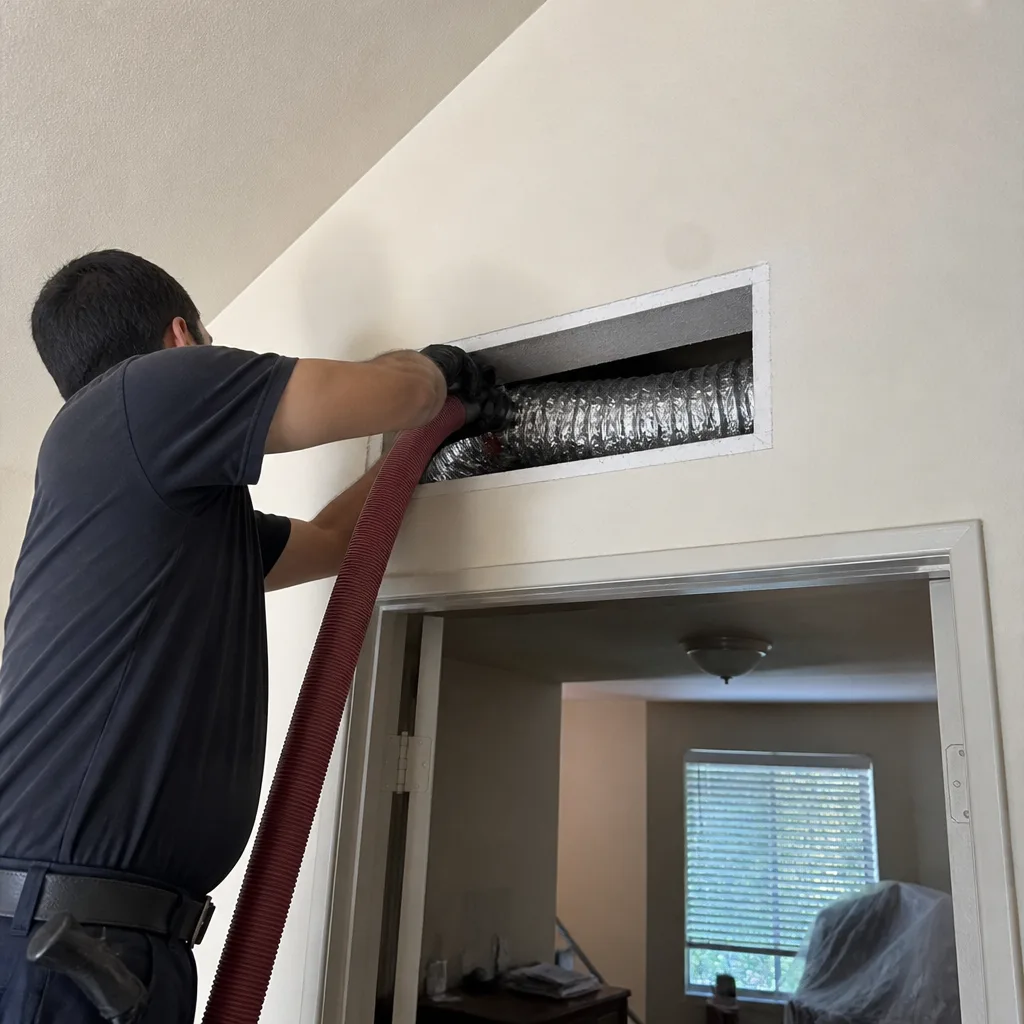
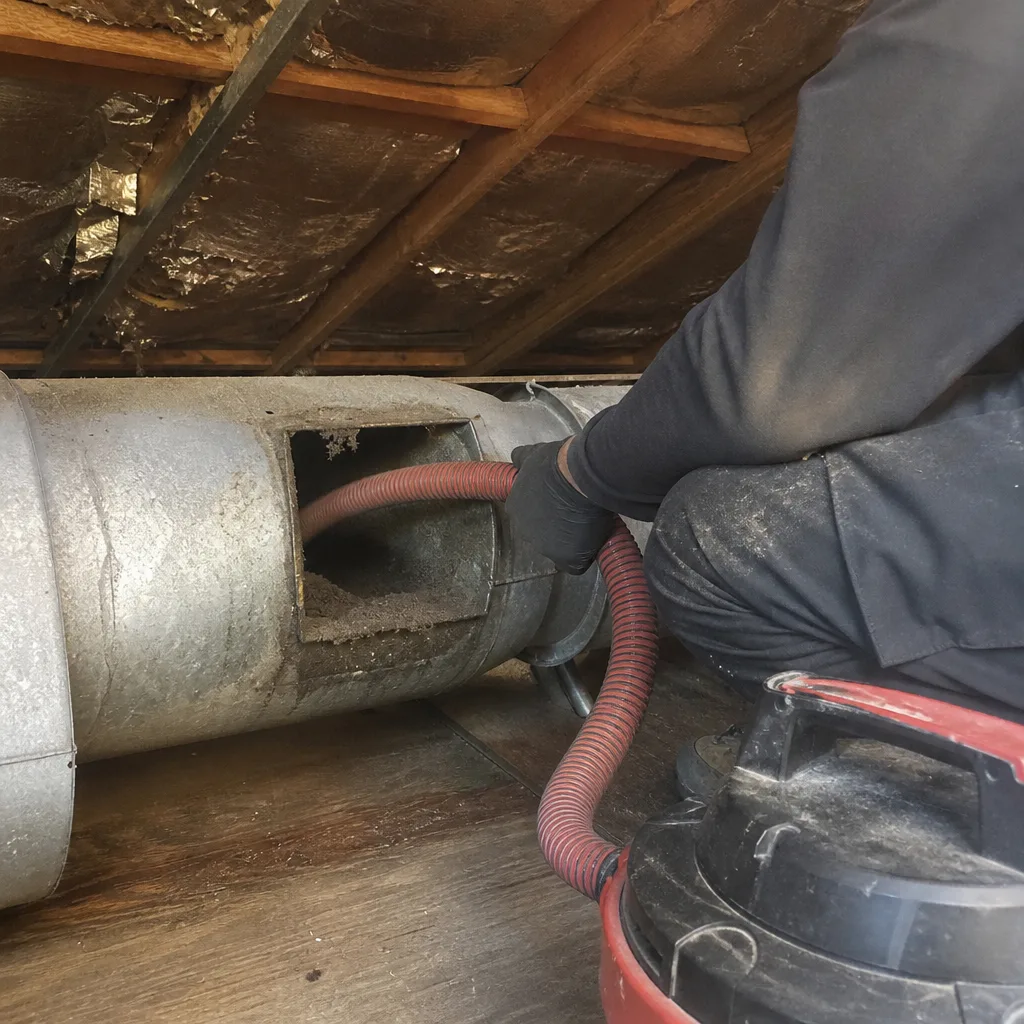
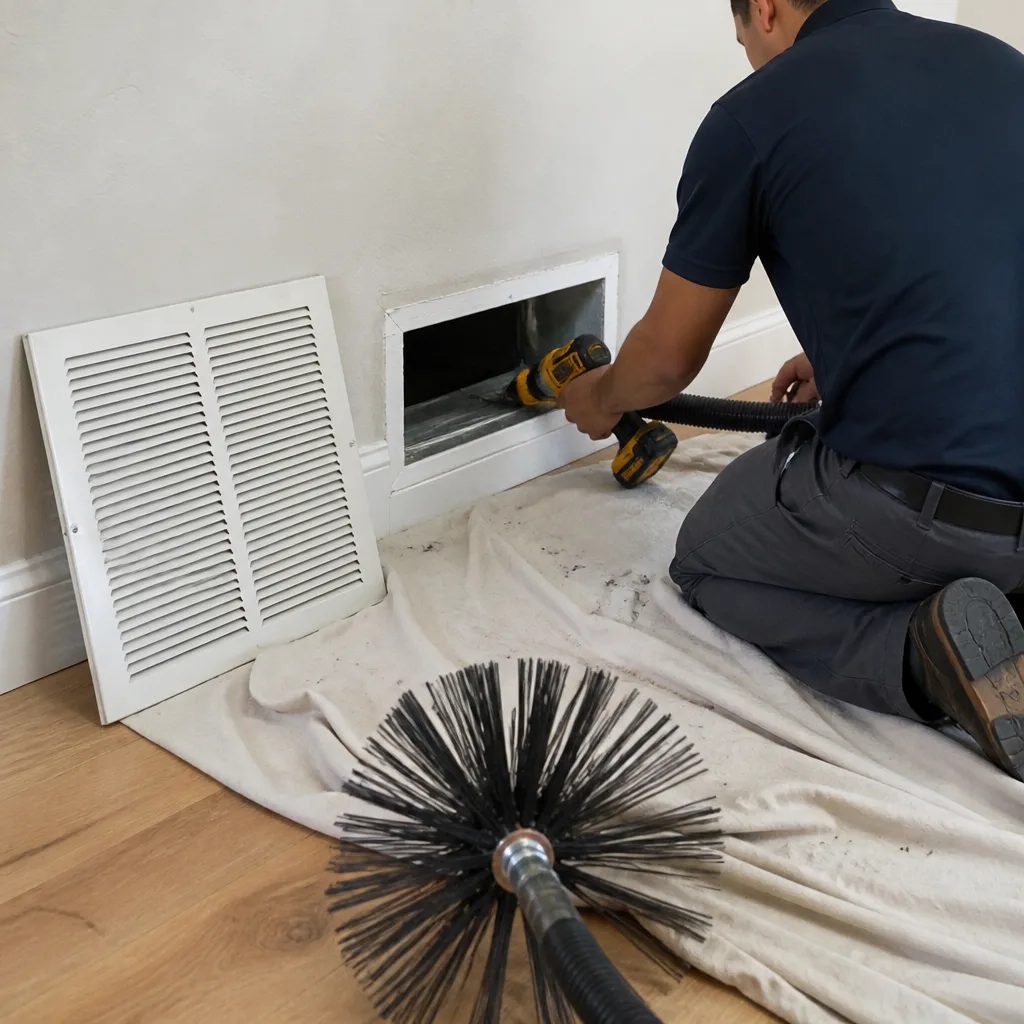
See the difference
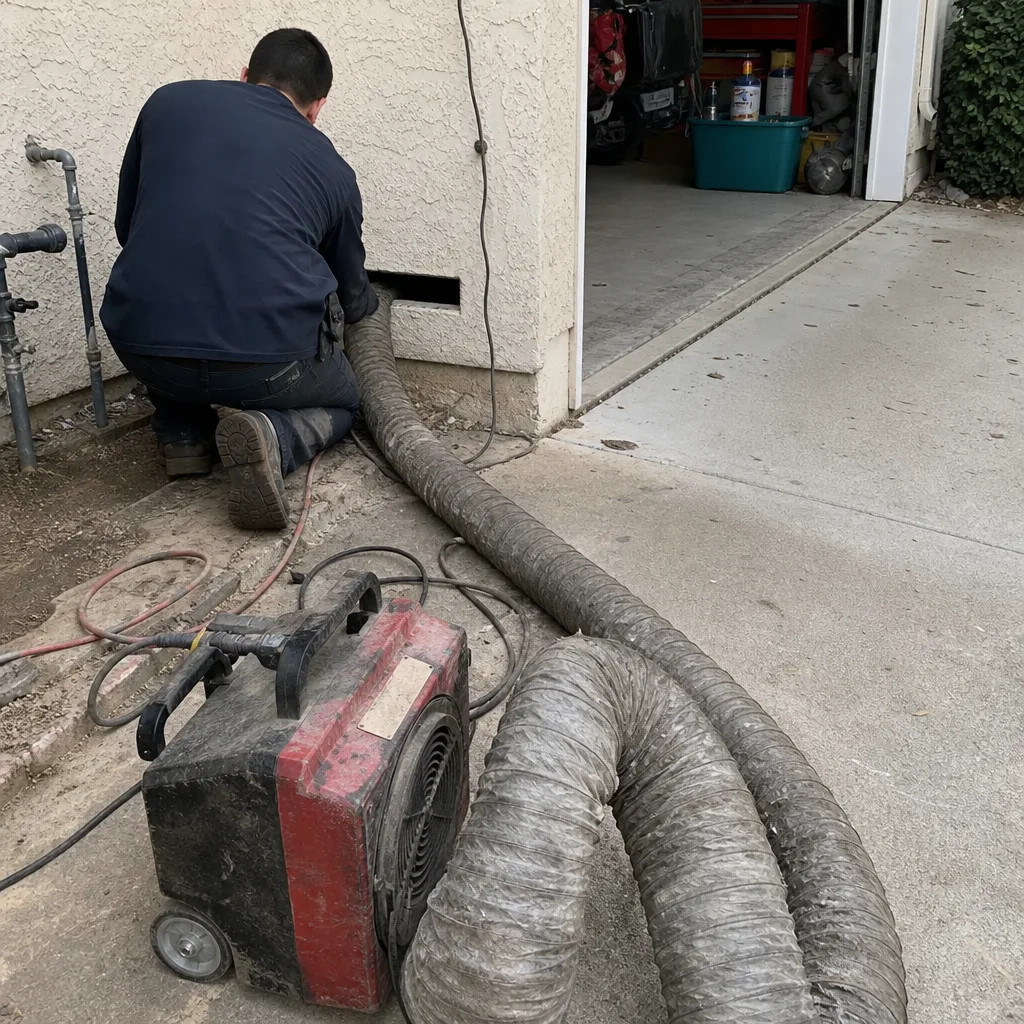 Before
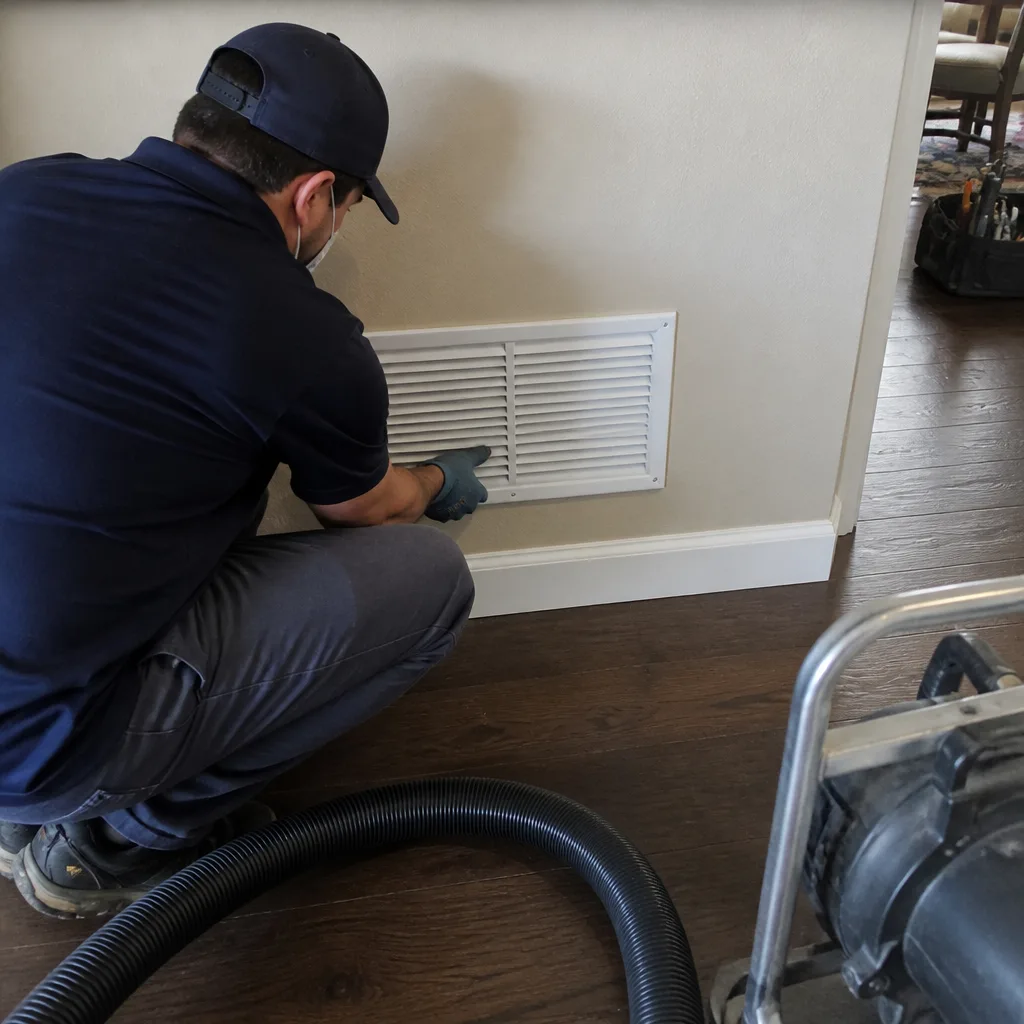 After
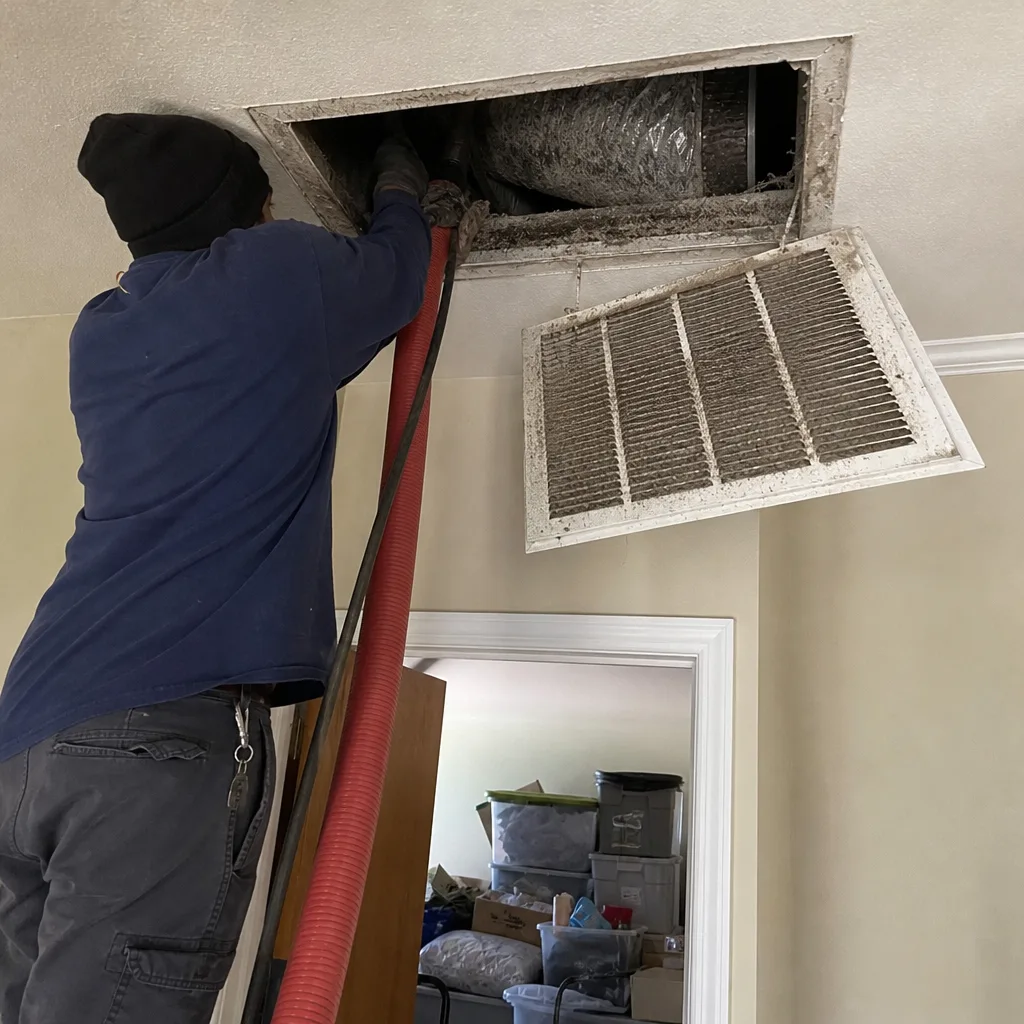 Before
 After
 Before
 After
When to Call a Professional
Some troubleshooting outcomes point clearly to professional intervention. If you’ve confirmed a loose flex connection deep in the attic, a collapsed liner, a wet duct section, or a heat exchanger that merits inspection, don’t attempt the fix from a ladder with zip ties and hope. Flex duct repair done wrong fails silently, and attic work in Brentwood’s summer heat is dangerous. If your camera inspection shows heavy contamination in branch lines that a previous cleaning missed, or if your persistent symptoms trace to an equipment issue rather than the ducts, call a specialist who does this work daily. Duct Cleaning Brentwood offers free estimates in Brentwood – call (833) 631-4988 and tell us what symptoms you’re dealing with. We’ll tell you honestly whether your problem is a redo, a repair, or something the ducts were never responsible for.
Frequently Asked Questions
A musty odor after duct cleaning almost always means moisture is present in the system, not that the cleaning failed. The most common sources are a clogged condensate drain, duct sweating in a hot attic, a moldy humidifier pad, or a bathroom exhaust vent discharging into the attic. In Brentwood’s hot summers, condensation on poorly insulated ducts is the leading cause we see. Have a technician inspect for moisture at the coil cabinet and along accessible duct runs before scheduling another cleaning. Call (833) 631-4988 and we’ll help you pinpoint the source.
Ask for before-and-after camera footage of the interior of each branch line. A professional cleaning with Rotobrush or Nikro equipment includes visual documentation; if it’s missing, the cleaning likely wasn’t verified. You can also remove a supply register and look down the duct with a flashlight. If the walls still show a thick dust film six feet from the register, the branch line wasn’t reached. Incomplete cleanings typically miss branch lines entirely while the main trunk looks acceptable.
Airflow problems after duct cleaning usually trace to a flex duct connection that was knocked loose during the cleaning, not to any failing of the cleaning itself. Aggressive agitation without proper branch line support can disconnect or crush flex runs, especially in tight attic spaces. A single room with weak airflow after a cleaning points to that specific branch line being compromised. A section with a crimped liner or separated collar won’t be fixed by more cleaning; it needs mechanical repair. Call (833) 631-4988 if you notice this pattern after a recent cleaning.
A return-side duct leak pulls unfiltered attic or crawlspace air into the system, delivering it to every supply register in the home. Signs of leakage include dust accumulation around return grilles, visible gaps at duct joints in the attic, elevated particle counts in the supply air, and allergy symptoms that don’t improve after cleaning. Homes in Brentwood with duct systems in unconditioned attics are most vulnerable. A pressure test or particulate count at the return versus supply confirms leakage, and sealing with mastic eliminates it.
Duct cleaning removes accumulated particulate and biological material from the air delivery path, but persistent allergy symptoms often have an additional source outside the ducts. Common culprits that remain after cleaning are a dirty blower wheel, leaky return ducts, and a bypassed or undersized filter. The sequence that works in Brentwood homes is: clean the ducts thoroughly, seal any return-side leaks, clean the blower wheel, and upgrade the filter to MERV 11 or better in a properly sealed cabinet. That combination addresses the full airflow path rather than one segment of it.
In Brentwood’s climate, most homes benefit from a duct cleaning every 3 to 5 years, with more frequent cleaning if pets are present, occupants smoke, or the home sits near agricultural activity. The specific drivers in Brentwood are summer attic heat causing duct sweating, and fall agricultural dust entering through leaks and unsealed filter racks. Homes with documented mold from moisture intrusion, or heavy renovation dust, should be cleaned immediately rather than waiting for a scheduled interval. When we clean, we also inspect for the condition issues that shorten that interval: leaky joints, failed insulation wrap, and evidence of pest activity.
The Bottom Line
When air duct cleaning “doesn’t work,” the cleaning itself is rarely the whole story. Odor is moisture; water needs a source that cleaning won’t touch. Weak airflow is physical obstruction or disconnection; vacuums don’t reconnect flex lines. Allergy symptoms are often upstream: a blower wheel, a leak, a bypass filter. The sequence that resolves most Brentwood calls is diagnostic first, then treatment. Confirm what’s actually wrong, fix the physical defects, clean what’s dirty, and verify the work with cameras. That process works every time. Everything else is guesswork. If you’re in Brentwood and your ducts were cleaned but the problem persists, call (833) 631-4988 and describe what you’re seeing. We’ll tell you what we’d check first, in plain language, before any van rolls to your door.
Written by the team at Duct Cleaning Brentwood, serving Brentwood since 2018.